
ASTM D6400
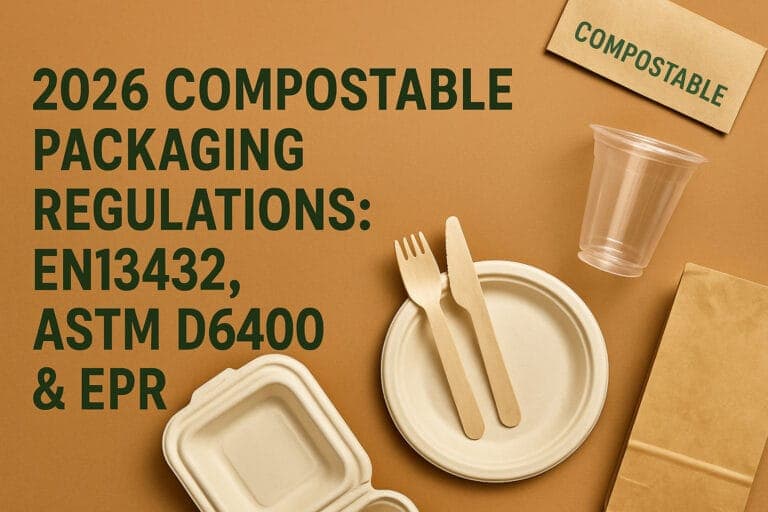
ASTM D6400 is a specification established by ASTM International that outlines the requirements for labeling plastics and plastic products as compostable in municipal and industrial aerobic composting facilities, requiring products to biodegrade at least 90% within 180 days and disintegrate through a 2mm screen within 12 weeks.
ASTM D6400 is a specification established by ASTM International that defines the requirements for labeling plastics and plastic products as compostable in municipal and industrial aerobic composting facilities. The standard requires products to biodegrade at least 90% of their original material within 180 days and physically disintegrate to pass through a 2mm screen within 12 weeks under thermophilic conditions between 40°C and 70°C.
What Are the Core Requirements of ASTM D6400?
ASTM D6400 comprises three primary tests that products must pass to be considered compostable. The biodegradation test requires 90% conversion of the material’s carbon into carbon dioxide within 180 days in a commercial composting environment. The disintegration test mandates that the product breaks down to the extent that it is indistinguishable from finished compost and can pass through a 2mm screen in less than 12 weeks.
The third requirement is ecotoxicity testing. The compost resulting from the biodegraded product must not exhibit any toxicity that would inhibit plant growth. This ensures the final compost is safe for agricultural use and doesn’t introduce harmful substances into the environment.
How Does ASTM D6400 Differ From Home Composting Standards?
ASTM D6400 is specifically designed for industrial and municipal composting facilities, which operate under controlled conditions such as higher temperatures and specific microbial activity. Home composting typically occurs at lower temperatures and varies widely in conditions, so not all ASTM D6400-certified products will compost effectively at home. The thermophilic temperatures maintained in commercial facilities (40°C to 70°C) are rarely achieved in backyard compost piles.
This distinction is critical for foodservice operators. Products certified to ASTM D6400 require proper disposal through commercial composting programs, not home composting bins.
What Products Can Meet ASTM D6400 Standards?
ASTM D6400 is applicable to products made from plastics, including packaging materials, food service items, and agricultural films. Although the standard was developed for plastics, it can also be used for many other solid materials including paper products, textiles, foam, and food packaging. Common applications in foodservice include cutlery, plates, cups, takeout containers, and food packaging made from materials like PLA (Polylactic Acid) and other bioplastics.
To receive certification, these products must meet specific criteria for biodegradation, disintegration, and eco-toxicity in industrial composting facilities. The testing process is rigorous and must be performed by accredited laboratories.
Is ASTM D6400 a Certification or a Standard?
ASTM D6400 is a testing standard, not a certification itself. BPI (Biodegradable Products Institute) provides third-party certification that confirms a finished product meets the ASTM D6400 requirements. Many composting facilities in the United States accept only packaging that meets ASTM D6400 and is BPI certified, as this keeps their compost clean and safe.
In Europe, TUV Austria offers their OK compost INDUSTRIAL certification, which is the equivalent of a BPI certification in America. The ASTM D6400 standard is equivalent to the ISO 17088 standard published by the International Standards Organization.
What Should Foodservice Operators Know About ASTM D6400?
The infrastructure for composting varies by region, and not all facilities can handle compostable plastics. Before switching to ASTM D6400-certified products, verify that your local waste management or commercial composting facility accepts them. Many municipalities require specific certifications or have restrictions on compostable plastics.
Products must meet the ASTM D6400 standard specification or the ASTM D6868 standard specification (for compostable coatings), and any applicable labeling guidelines in the federal Guides for the Use of Environmental Marketing Claims. The Composting Manufacturing Alliance (CMA) tests for compostability and approves compostable products in different compost systems and facilities, providing additional verification beyond standard certifications.
For more information on implementing compostable solutions, see our guides on streamlining business operations with compostable waste solutions and partnering with certified suppliers for sustainable success.
Key Properties
Common Uses
ASTM D6400 certification is used for food service items including cutlery, plates, cups, takeout containers, and food packaging made from bioplastics like PLA. It also covers agricultural films, packaging materials, paper products, textiles, and foam designed for disposal in industrial composting facilities. Products certified to this standard are primarily used by foodservice operators, institutions, and businesses with access to commercial composting programs.
Sustainability
ASTM D6400-certified products provide an end-of-life solution for food-contaminated packaging that cannot be recycled. Many composting facilities in the United States accept only packaging that meets ASTM D6400 and is BPI certified, keeping their compost clean and safe for agricultural use. However, the standard is designed for industrial composting facilities operating under controlled conditions—home composting typically occurs at lower temperatures, so ASTM D6400 products may not break down effectively in backyard compost piles. Regional composting infrastructure varies significantly, so operators should verify local facility acceptance before implementing ASTM D6400-certified products in their waste management programs.