Carryover Cooking
Carryover cooking is the phenomenon where food continues to cook after being removed from a heat source, as residual heat migrates from the hot exterior to the cooler interior, typically raising internal temperature by 5-25°F (3-14°C).
Carryover cooking is the phenomenon where food continues to cook after being removed from a heat source, caused by residual heat migrating from the hot outer layers toward the cooler center. This internal temperature rise can add 5 to 25 degrees Fahrenheit (3-14°C) to your final product, making it critical to remove meat from heat before it reaches your target temperature.
The effect varies dramatically based on the size and density of what you’re cooking. A thick prime rib roasted at 350°F can experience a 20°F temperature increase and continue cooking for 20 minutes or more. A thin skirt steak, by contrast, might only see a 5°F rise over a few minutes.
How Carryover Cooking Works
Heat naturally flows from hotter areas to cooler ones until equilibrium is reached. When you pull a steak off the grill, the surface temperature might be 150°F while the center sits at 120°F. Heat continues migrating inward even though you’ve stopped applying external heat.
Cooking method and temperature matter. High-heat methods (grilling at 400°F+, pan-searing) create steeper temperature gradients between surface and center, leading to more dramatic carryover. Low-and-slow cooking at 225°F produces gentler gradients and less carryover — sometimes as little as 5°F.
Practical Application in the Kitchen
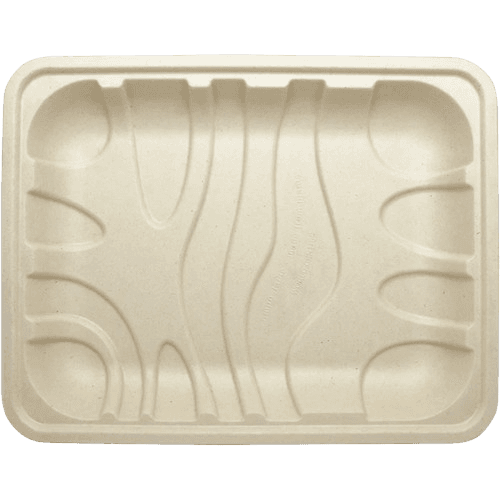
Remove large roasts and thick steaks 5-10 degrees below your target temperature. For a medium-rare steak (final temp 130-135°F), pull it at 120-125°F. Let it rest on a meat tray or cutting board.
Resting time typically runs 5-20 minutes depending on size. A 2-pound tri-tip needs 10-15 minutes. An 8-pound standing rib roast should rest 20-30 minutes. Thin cuts like flank steak only need 5 minutes.
Poultry presents a special case. While carryover still occurs, food safety guidelines recommend cooking chicken and turkey to completion (165°F throughout) rather than relying on carryover to reach safe temperatures.
Common Mistakes
The biggest error is cooking meat to your target temperature on the heat source. A steak pulled at 135°F will climb to 145°F during rest — moving from medium-rare to medium. Track temperatures with an instant-read thermometer and account for the expected rise.
Skipping the rest period altogether wastes the carryover effect. Cutting into meat immediately causes juices to run out onto the cutting board instead of redistributing throughout the muscle fibers. The same heat migration that continues cooking also allows protein fibers to relax and reabsorb moisture.
Using appropriate trays during the resting period helps manage moisture and keeps your workstation clean while carryover does its work.
Common Uses
Carryover cooking is most relevant when preparing large roasts, thick steaks, and other substantial cuts of meat. Chefs remove proteins from heat 5-10 degrees below target temperature to account for the rise during resting. The technique is discussed during service when timing multiple dishes, as the resting period allows cooks to focus on other components while meat finishes cooking on its own. Line cooks use the principle to batch-cook proteins ahead of service, pulling them early and letting carryover bring them to temperature. The concept also comes up in food safety discussions, particularly regarding poultry, which must reach full temperature on the heat source rather than relying on carryover to achieve safety standards.