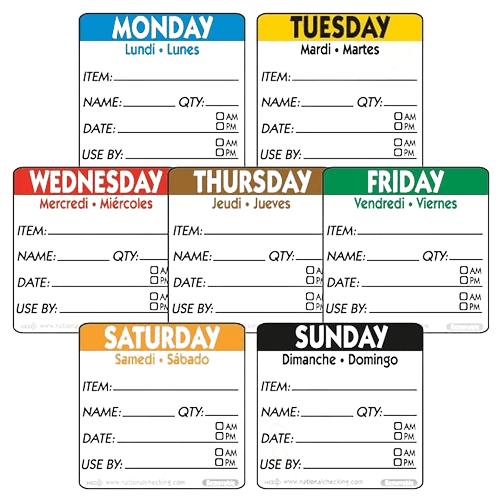
Date Labeling
Date labeling is the practice of marking food containers to show when time/temperature control for safety (TCS) foods were prepared, opened, or must be discarded, as required by FDA Food Code for ready-to-eat TCS foods held more than 24 hours.
Date labeling in restaurants is the practice of marking food containers with the date when time/temperature control for safety (TCS) foods were prepared, opened, or must be discarded. This system prevents the growth of pathogens like Listeria monocytogenes that can multiply even at refrigeration temperatures. The FDA Food Code requires date marking for ready-to-eat TCS foods that will be refrigerated for more than 24 hours.
The 7-Day Rule
The FDA Food Code allows TCS foods to be stored for a maximum of seven days under refrigeration. Day 1 is the day the food was prepared or the package was opened. On day 8, the food must be discarded regardless of appearance or smell.
For multi-ingredient dishes, use the earliest-prepared component to determine the preparation date. If you made chicken on Monday and vegetables on Wednesday, then combined them into a salad on Thursday, Monday is day 1 for that salad.
What Needs Date Labels
Ready-to-eat TCS foods prepared on-site or opened from commercial packaging require date marking. This includes deli meats, prepared salads, cut produce, cooked proteins, house-made sauces, and opened dairy products. The requirement applies when these foods will be held refrigerated for more than 24 hours.
Unopened manufacturer packaging with its own date doesn’t need additional labeling. Once opened, the restaurant must apply its own date mark starting the 7-day countdown.
Date Labeling vs Product Dating
Product dating refers to manufacturer dates like “Best By” or “Use By” printed on packaged foods—these indicate quality, not safety, and aren’t federally regulated except for infant formula. Date labeling is your restaurant’s internal system for marking when foods are prepared or opened on-site. It’s a food safety requirement, not a quality suggestion.
State and local health departments enforce date marking regulations. CDC research found almost 1 in 4 restaurants failed to date mark foods that should have been marked, though restaurants with formal date-marking policies were five times more likely to comply consistently.
Effective Date Marking Systems
Include at minimum the product name, prep date or discard date, and employee initials for accountability. Food rotation labels come in various systems: adhesive labels with writable surfaces, colored day dots for quick visual reference, or dissolvable labels that wash off in dishwashers.
Date marking works alongside FIFO rotation to manage inventory in walk-in coolers and reach-in refrigerators. When storing prepared foods in Cambros or other containers, apply labels where they’re easily visible without moving items.
Implementation Best Practices
Make date marking part of your prep sheet workflow. Train staff to label immediately after preparation—not at the end of the shift when details blur. Use consistent formatting: write dates as MM/DD or spell out days to prevent confusion.
Place labels on the same spot on every container so staff can quickly scan shelves during service. Front-facing labels at eye level work best. For items that get portioned throughout the day, label both the original container and any secondary containers.
Proper date labeling reduces food waste by preventing premature discarding while maintaining safety standards. The USDA estimates 30 percent of food supply is lost at retail and consumer levels, partly due to confusion about dating. A clear system protects both customers and your bottom line.
Common Uses
Kitchen staff apply date labels immediately after preparing ready-to-eat TCS foods like salads, cooked proteins, and house-made sauces. Line cooks mark containers when opening commercial products like deli meats or dairy that will be held more than 24 hours. Health inspectors check date labeling compliance during routine inspections, and managers review labeled items during line checks to identify foods approaching the 7-day limit. Date labels appear on storage containers in walk-in coolers, reach-in refrigerators, and prep stations throughout professional kitchens.