ADA Signage
ADA Signage refers to tactile and Braille signs mandated by the Americans with Disabilities Act for permanent rooms and spaces in hotels and other public accommodations, governed by the 2010 ADA Standards for Accessible Design.
ADA signage refers to tactile and Braille signs required by federal law at permanent rooms and spaces throughout hotel properties. Under ADA Title III, hotels are classified as places of public accommodation — meaning every hotel open to the public must comply, regardless of size, brand, or age of the building.
What the Law Requires
The governing standard is the 2010 ADA Standards for Accessible Design, published by the U.S. Department of Justice. Sections 216 and 703 cover signage scoping and technical requirements. Any sign identifying a permanent room or space — guest room numbers, restrooms, exits, stairwells, elevator floor designations, and meeting room labels — must carry both raised tactile characters and Grade 2 Braille.
Temporary signs in place fewer than seven days are exempt from tactile and Braille requirements. Directional and informational signs must meet contrast and visibility standards but don’t always require tactile characters.
Technical Specifications
Tactile characters must be raised at least 1/32 inch above the background, rendered in uppercase sans-serif font, and measure between 5/8 inch and 2 inches in height. All ADA-compliant signs must have a non-glare finish — matte, eggshell, or satin. Glossy or highly reflective materials are a direct violation.
A minimum 70% contrast ratio between characters and background is industry best practice. The 2010 Standards require light-on-dark or dark-on-light combinations. Grade 2 (contracted) Braille is required — Grade 1 Braille is a compliance failure even if readable. Braille dots must be rounded and kept at least 3/8 inch from raised text.
Mounting Requirements
Signs must be mounted on the latch side of the door — never on the door surface itself. Tactile character baselines must fall between 48 and 60 inches above the finished floor (AFF), with industry best practice at a 54-inch centerline. A minimum 18-inch clear floor space must be clear in front of the sign for a forward approach.
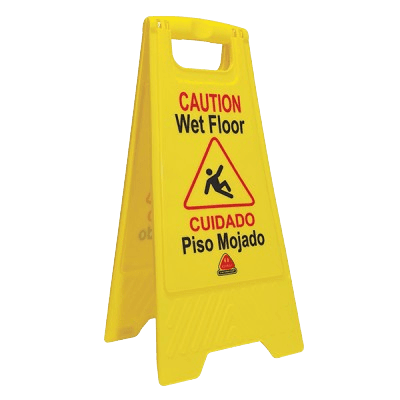
Stanchions and temporary barriers used in hotel lobbies and event corridors must be positioned so they never obstruct this required clear floor space near tactile signs or along ADA-required accessible routes.
Approved Materials and Brand Flexibility
Common compliant materials include photopolymer (the industry standard), matte-finished acrylic, brushed aluminum, brass, bronze, and wood or laminate composites with applied raised characters. The ADA specifies contrast ratios, font style, finish type, and mounting dimensions — but leaves broad flexibility in color, material, and texture, allowing hotels to align signs with brand aesthetics.
The International Symbol of Accessibility (ISA) pictogram is required on signs indicating accessible rooms, parking, and routes. Pictogram fields must be at least 6 inches in height.
Digital and Electronic Signs
Electronic room indicator panels — including Do Not Disturb and “Make Up Room” displays — can be ADA compliant as long as the permanent room number portion still meets all tactile character and Braille standards. Digital meeting room signs are a growing trend in hospitality, allowing event information to update instantly without replacing physical signage. See Signage and Communication products for compliant options.
Penalties for Non-Compliance
First-time federal civil violations can carry penalties up to $75,000. Repeat violations reach up to $150,000 per incident. High-profile hospitality settlements typically range from $50,000 to $500,000, not including legal fees. Any guest, advocacy group, or attorney can file an ADA complaint with the DOJ.
Ongoing Compliance and Audits
ADA signage compliance is an active operational responsibility, not a one-time installation task. Braille wears off signs over time, signs get relocated or replaced during renovations, and non-compliant replacements are among the most common hotel violations found during inspections. A full-property ADA audit should be conducted at minimum annually, with targeted signage zone checks quarterly.
Any renovation or alteration to an accessible element triggers an immediate compliance review under the 2010 Standards. Certified Access Specialists (CASp) are qualified professionals who assess hotel properties for signage compliance and provide a documented compliance roadmap with legal protections. Hotels in states like California must also comply with stricter state standards — California Title 24 imposes requirements beyond federal ADA minimums, creating multi-jurisdiction legal exposure if either standard is missed.
Which Departments Own ADA Signage
Compliance responsibility is shared across departments. Facilities and Engineering handle installation, inspection, and maintenance. Housekeeping staff report damaged or worn signs during their rounds — the same operational discipline that applies to health inspection readiness. General Management and Front Office manage policy, guest accommodation requests, and DOJ correspondence. Design and FF&E teams ensure compliance during procurement and renovations, coordinating with construction codes like ANSI A117.1 and the International Building Code.
Like Right-to-Work Posting requirements, ADA signage obligations are non-negotiable federal compliance items that belong in every hotel’s documented facilities management program.
Key Properties
Common Uses
Department & Usage: ADA signage compliance spans multiple hotel departments. Facilities and Engineering manage installation, ongoing inspection, and maintenance of all tactile and Braille signs. Housekeeping teams serve as first-line reporters of damaged, worn, or relocated signs during daily rounds. General Management and Front Office handle guest accommodation requests, DOJ correspondence, and compliance policy. Design and FF&E teams ensure sign specifications meet ADA and applicable state standards (e.g., California Title 24) during any renovation, new build, or permit application. Compliance audits — full-property annually, zone checks quarterly — are most commonly owned by the Facilities Director or a designated Certified Access Specialist (CASp).
Sustainability
Photopolymer, the most widely used ADA sign material, is a petroleum-based resin. Hotels pursuing LEED or other green building certifications should evaluate recycled-content or low-VOC alternatives where technically compliant. Selecting durable, high-quality materials from the start reduces replacement frequency and associated material waste — making it both a compliance and sustainability best practice. Digitally integrated ADA-compliant room sign systems (e-ink or LED panels with embedded tactile components) can reduce printed signage waste by allowing instant content updates without full sign replacement. Preventive maintenance programs that catch Braille wear and minor damage early also reduce waste from premature sign disposal triggered by non-compliant renovations.