Banquet Round
A Banquet Round is a circular folding table, typically 60 or 72 inches in diameter, used as the standard table format for hotel banquet events, weddings, galas, fundraisers, and corporate dinners.
A Banquet Round is a circular folding table — typically 60 or 72 inches in diameter — used as the standard table format for hotel banquet events, weddings, galas, fundraisers, and corporate dinners. Its circular shape promotes 360-degree conversation among guests and allows servers to reach every seat from a single position, making it both guest-friendly and operationally efficient.
Standard Sizes and Seating Capacity
The 60-inch (5 ft) round is the most widely used Banquet Round in hotel event spaces. It comfortably seats 8 guests for formal plated dining or up to 10 at maximum capacity, provided you allow a minimum of 24 inches of table edge per person.
The 72-inch (6 ft) round seats 10 guests comfortably and up to 12 at maximum. This size is better suited for large-scale events where more table surface area is needed for elaborate place settings, centerpieces, or family-style service.
Room Layout and Spacing Requirements
The National Association of Catering and Events (NACE) recommends 10 to 12 square feet per person for round-table banquet seating with plated service. Add 20–30% on top of that total for service zones and circulation paths.
For practical floor planning, a 60-inch Banquet Round requires approximately 10 feet of total diameter — table plus surrounding space — to allow guests to push chairs back and servers to move freely. Center-to-center, plan for 10 feet between 60-inch rounds and 11 feet between 72-inch rounds in a row layout.
Maintain a minimum of 54 inches between table edges for server aisle clearance, especially where staff carry trays. Main traffic aisles — used by guests and banquet captains — should be at least 60 inches wide. ADA-compliant layouts and local fire codes may require additional spacing; always verify requirements with your venue’s facilities team before finalizing a floor plan.
Tablecloth Sizing Formula
To find the correct tablecloth size, use this formula: Table Diameter + (2 × Desired Drop Length) = Required Tablecloth Diameter. For a 60-inch table with a standard 15-inch drop, you need a 90-inch tablecloth. For a formal floor-length 30-inch drop on the same table, order a 120-inch cloth. A 72-inch table with a 15-inch drop requires a 102-inch cloth.
For high-volume or informal events, disposable table covers are a practical alternative to laundered linens. Products like the Hoffmaster Cellutex Tissue/Poly Paper Table Cover provide a clean presentation while eliminating commercial laundering costs and turnaround time.
Banquet Setup and Floor Plan Terminology
A Banquet Setup refers to the full floor plan and seating arrangement created by grouping Banquet Rounds across a ballroom or event space. The layout is drawn according to the Function/Banquet Event Order (BEO) and accounts for table count, cover count, service aisles, buffet stations, and staging areas.
A Crescent-Round Setup is a variation where chairs occupy only about two-thirds of the table’s circumference. This prevents any guest from sitting with their back to a speaker or stage, making it a popular configuration for hybrid meeting-and-dining events or general session transitions into lunch.
Buffet Service Equipment
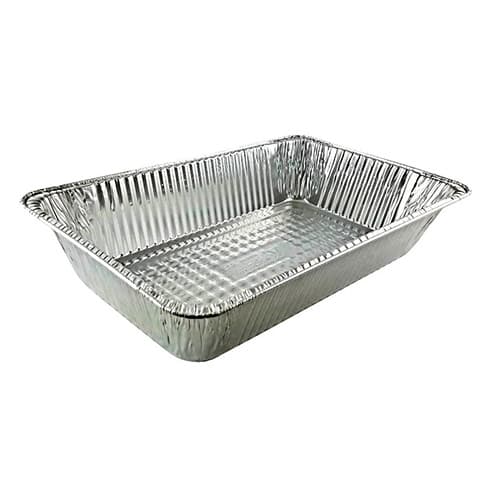
When Banquet Rounds are used for buffet-style service, steam tables and chafing dishes loaded with hotel pans keep food at safe holding temperatures along the buffet line. Full-size pans — including deep, medium, and extra-deep heavy-duty options — are standard for large-volume events. Half-size deep pans work well for side dishes or multi-item stations. For plated service, warming cabinets hold plated dishes at temperature before runners deliver them to each table.
Department Responsibility
The Banquet department — operating under the Food & Beverage (F&B) division — is responsible for setting up, servicing, and breaking down Banquet Rounds for every event. The Banquet Manager creates the room layout per the BEO; the Banquet Captain oversees service execution and assigns each server a station (a designated group of tables).
Before service begins, a pre-shift meeting briefs the team on table assignments, cover counts, menu details, and service sequence. Side work for banquet staff includes dressing tables with linens, placing rollups, setting centerpieces, and filling water. During formal plated events, table marks identify each guest’s pre-ordered entrée selection, and table numbers guide both guests and servers throughout service.
Key Properties
Common Uses
Department & Usage: The Banquet department, under Food & Beverage (F&B), uses Banquet Rounds as the default table format for any event where dining is the primary activity — weddings, gala dinners, corporate award ceremonies, fundraisers, and holiday parties. The Banquet Manager lays out the room per the BEO, assigning table numbers, service stations, and aisle placements. Banquet Rounds are also used in meeting contexts — particularly in Crescent-Round configurations — for team-building sessions, breakout discussions, and hybrid meeting-luncheon formats where face-to-face seating is preferred. Event Sales and Catering Managers reference standard Banquet Round capacities when selling event space and building catering proposals.
Sustainability
Disposable table covers made from tissue/poly constructions — such as the Hoffmaster Cellutex Paper Table Cover — are commonly used on Banquet Rounds for high-volume or informal events as a cost-effective alternative to laundered linens, reducing water and energy consumption from commercial laundering cycles. Venues looking to reduce linen waste can specify recyclable or compostable table covers for casual banquet formats. For the tables themselves, selecting folding Banquet Rounds made from sustainably sourced wood or recycled aluminum frames reduces long-term material waste compared to lower-durability alternatives.