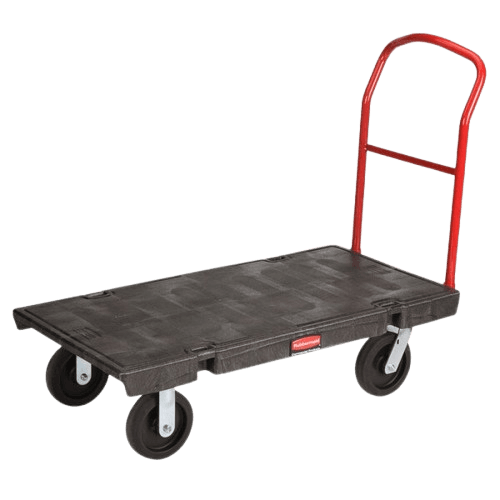
Bell Cart
A bell cart is a wheeled, frame-and-platform cart operated by hotel bell staff to transport guests' luggage and belongings throughout the property, most commonly between the lobby and guest rooms during arrival and departure.
A bell cart is a wheeled, frame-and-platform cart used by hotel bell staff to transport guests’ luggage and belongings between the lobby, guest rooms, storage areas, and loading zones. It is one of the most visible pieces of front-of-house equipment a hotel operates, because it appears during the first and last impression a guest has of the property.
Types of Bell Carts
The two primary styles are the upright birdcage cart and the truck-style dolly cart. The birdcage cart — named for its rounded, cage-like overhead frame — is the industry standard for full-service, upscale, and luxury hotels. It features a garment hanging rod, retainer bars to prevent bags from sliding, and a carpeted deck platform that protects luggage from scratches.
The truck-style dolly cart functions more like a heavy-duty shipping dolly. It handles larger, heavier loads efficiently and works well for back-of-house luggage transfers or high-volume resort operations where raw capacity outweighs lobby aesthetics.
Key Specifications to Evaluate
Weight capacity for commercial bell carts typically ranges from 400 to 600 pounds. Boutique and lower-volume properties generally select 400 lb-rated carts, while high-volume resorts and convention hotels need higher-rated models that can handle multiple oversized bags in a single run.
Frame tube diameter typically runs 1″ to 2″. A thicker tube diameter increases structural rigidity and load stability — important for properties moving large volumes of heavy luggage daily. Before ordering, measure elevator cab dimensions and doorway clearances at your property; a cart that doesn’t fit your elevators is unusable regardless of its specs.
Wheel type affects both performance and guest experience. Pneumatic (air-filled) wheels roll more quietly across hard lobby floors and absorb vibration on uneven surfaces, making them well suited for multi-floor hotel environments. Solid rubber or semi-pneumatic wheels handle heavier loads without the risk of a flat, but can be noisier on tile or marble.
Frame Finishes and Lobby Aesthetics
Bell carts are available in stainless steel, chrome-plated steel, brass, titanium gold, and powder-coated finishes. The finish choice should match the property’s lobby décor and brand standards — a brass or gold-finish birdcage cart reads differently in a boutique historic hotel than a brushed stainless cart in a contemporary business hotel.
Stainless steel and solid brass frames offer longer service lives than chrome-plated steel, which can chip or corrode over time. From a total cost of ownership standpoint, investing in a durable finish reduces replacement frequency.
Safety and Protective Features
Wheel locking mechanisms on at least two wheels are a standard safety requirement. Bell staff need to lock carts near elevator doors and on any inclined surface to prevent rolling during loading and unloading.
Non-marking full-perimeter bumpers protect lobby walls, elevator door frames, and corridor surfaces from impact damage caused by daily cart maneuvering. This is a small feature with a meaningful impact on maintenance costs over time.
Self-Service and Limited-Service Properties
Limited-service hotels without dedicated bell staff should still provide self-service luggage carts in the lobby. Guests expect them, and their absence creates friction during check-in and check-out. The upright birdcage-style cart is the most practical for self-service use because its design is immediately recognizable and easy to operate without staff assistance.
Operational Context
Bell carts are stored and dispatched from the bell stand, a designated station in the hotel lobby. During pre-shift checks, bell attendants inspect carts for cleanliness, wheel function, and any visible damage before guest-facing operations begin. Cleaning, polishing, and restocking bell carts is also standard side work assigned to bell staff during slow periods.
For VIP arrivals, bell cart service is often upgraded — a single dedicated attendant escorts the cart directly to the room rather than using a shared luggage run. The condition and appearance of the cart itself becomes part of the VIP experience, which is why luxury properties invest in premium finishes and keep carts in immaculate condition.
Beyond luggage, bell carts are used to transport packages, amenity deliveries, and event materials throughout the property, making them a versatile piece of front-of-house equipment. For properties managing high-volume luggage operations, electric bell carts are an emerging option that can reduce physical strain on bell staff — a consideration worth factoring into ergonomics and staff wellness initiatives.
Hotels sourcing luggage handling equipment and other operational supplies can browse the Racks and Carts category for available options.
Key Properties
Common Uses
Department & Usage: Bell carts are operated by the bell services department — part of front-of-house hotel operations. Bell attendants (also called bellhops or bellmen) use carts during guest arrivals to move luggage from the vehicle or lobby to the guest room, and during departures to move bags back to the lobby or loading area. Carts are stored at the bell stand in the lobby and dispatched as guests arrive. Beyond luggage transport, bell staff also use carts for package deliveries, amenity runs, and event material transport throughout the property. In limited-service hotels without dedicated bell staff, self-service bell carts are placed in the lobby for guest use. Pre-shift inspection of carts for cleanliness, wheel function, and damage is a standard responsibility for bell attendants before each shift.
Sustainability
Bell carts do not carry specific eco-certifications, but durability is the primary sustainability factor when selecting a cart. Stainless steel and solid brass frames outlast chrome-plated steel, which is prone to chipping and corrosion — meaning fewer full-unit replacements over time. Selecting carts with replaceable carpeted deck panels and swappable wheel assemblies extends the product's usable life and reduces waste from disposing of otherwise functional carts due to a single worn component. Electric bell carts reduce physical strain on bell staff and may align with hotel ergonomics and staff wellness programs, though energy consumption should be evaluated as part of any sustainability assessment.