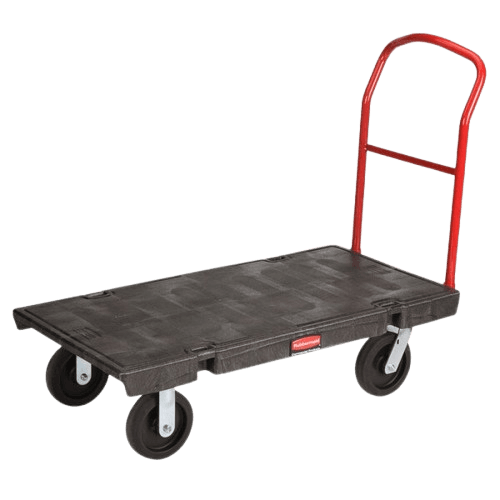
Dunnage Rack
A dunnage rack is a low-to-the-ground storage platform designed to keep food products and supplies elevated at least 6 inches above the floor to meet health code requirements, prevent contamination, and promote air circulation in restaurant storage areas.
A dunnage rack is a low-profile storage platform that keeps food products and supplies elevated off the floor to meet health code requirements and prevent contamination. Health codes require restaurants to store ingredients at least 6 inches above the ground in storage areas to protect against dirt, pests, and moisture while enabling proper air circulation. These racks serve as the foundation of compliant dry storage, walk-in coolers, and freezer organization.
Construction and Materials
Dunnage racks are manufactured from aluminum, stainless steel, or heavy-duty plastic. Aluminum models are lightweight, rust-proof, and built from primary-grade recyclable material that won’t corrode even in humid walk-in environments. Stainless steel racks offer maximum durability and cleanability for high-traffic operations. Plastic models feature smooth surfaces with rounded edges that prevent food packaging from tearing and resist corrosion without chemical treatments.
Weight capacity determines which material works best for your operation. Standard racks hold 2,000 pounds for typical dry goods storage. Heavy-duty all-welded models support up to 5,000 pounds for bulk flour sacks, sugar, large canned goods, and other dense ingredients. Check the manufacturer’s rated capacity before loading—overloading compromises structural integrity and violates safety protocols.
Design Variations
Stationary dunnage racks provide permanent storage solutions in walk-ins, dry storage rooms, and pantries. These fixed-position units offer the most economical option for dedicated storage areas. Mobile units add caster wheels for easy transport between storage areas and prep stations, making them ideal for operations that need to reconfigure layouts or move inventory frequently. Stacking models maximize vertical space by allowing racks to securely stack on top of each other without compromising stability.
The key difference between dunnage racks and standard warehouse or pallet racks is specialized ventilation and support designed specifically for food storage. Dunnage racks feature open-grid or slatted surfaces that promote airflow around products to prevent mold growth and maintain consistent temperatures. This design also makes floor cleaning easier by providing full access to the space beneath stored items.
NSF Certification and Compliance
NSF-approved dunnage racks meet food safety standards for use in freezers, coolers, and food displays. Look for NSF certification when purchasing racks for direct food contact or temperature-controlled environments. Some models include Microban antimicrobial protection built into the material to inhibit bacteria growth on the rack surface itself.
The 6-inch minimum clearance isn’t just best practice—it’s a health code requirement during inspections. Inspectors check storage areas for proper elevation, and violations can result in citations or failed inspections. Dunnage racks provide documented compliance while making your storage areas safer and more organized.
Maintenance and Longevity
Clean dunnage racks regularly by removing stored items and washing with approved sanitizer. The elevated design makes floor cleaning underneath straightforward—no need to move heavy boxes to sweep and mop. Inspect welds and joints quarterly for signs of stress, especially on heavily loaded racks.
Rust and corrosion resistance extends rack lifespan significantly. Aluminum and plastic models eliminate rust concerns entirely, even in damp walk-in environments. Stainless steel resists corrosion with minimal maintenance. This durability reduces replacement frequency and eliminates the need for protective coatings or chemical treatments that could contaminate food products.
Key Properties
Common Uses
Dunnage racks are essential in walk-in refrigerators and freezers for storing bulk ingredients like flour sacks, sugar, and large canned goods. In dry storage rooms and pantries, they organize heavy bulk items including popcorn kernels, canned vegetables, and boxed supplies. Warehouse receiving areas use mobile dunnage racks to temporarily stage incoming deliveries before distribution to proper storage locations. Janitorial closets rely on them to keep cleaning chemicals elevated and organized. The 6-inch elevation requirement makes dunnage racks mandatory equipment for health inspections in all commercial foodservice storage areas.
Sustainability
Aluminum dunnage racks are manufactured from primary-grade recyclable aluminum that can be reclaimed at end-of-life. Corrosion-resistant construction extends product lifespan to 10+ years in typical commercial use, reducing replacement frequency and waste generation. The elimination of rust means no chemical treatments or protective coatings that could contaminate food or require disposal. Heavy-duty models that support higher weight capacities reduce the total number of racks needed per operation, minimizing material consumption and storage footprint.