Room Service Menu
A room service menu is the printed or digital document presented to hotel guests listing all food, beverages, and select ancillary items available for delivery to their room, serving as the guest-facing ordering tool for in-room dining operations.
A room service menu is the printed or digital document presented to hotel guests listing all food, beverages, and select ancillary items available for delivery directly to their room. It is the primary guest-facing ordering tool for a hotel’s in-room dining operation and one of the most visible touchpoints for F&B quality perception.
What a Room Service Menu Includes
A standard room service menu covers breakfast items, sandwiches, snacks, international dishes (pasta, burgers, salads), beverages, kids’ meals, and late-night comfort food options. Full-service and luxury properties extend this to appetizers, entrees, desserts, and wine service — often delivered with white-glove presentation.
Not all items on a restaurant menu belong on a room service menu. The strongest room service menus are curated around items that travel well, hold temperature during delivery, and can be prepared consistently across all shift types. Menu engineering principles help F&B teams identify which items are both high-margin and high-demand, and Cornell University research has found that hotels applying menu engineering saw a 10% increase in sales.
Service Tiers and Menu Scope
Room service menus fall into three operational tiers based on the property type and available kitchen infrastructure. Full-service and luxury properties offer complete menus with multiple courses and a full beverage program. Business and boutique hotels typically offer a limited, curated selection focused on efficient execution. Select-service and extended-stay properties may offer only snacks and beverages, sometimes supplemented by third-party delivery platform integrations such as Grubhub or Uber Eats.
Hotels offering 24/7 room service commonly use separate day-part menus — breakfast, all-day, and late-night — or maintain one simplified menu available around the clock. Menu complexity directly affects prep time, food waste, and order accuracy; a leaner menu almost always outperforms an overextended one operationally.
Printed vs. Digital Formats
Both physical and digital menus remain in use. Many properties still place printed menus in guest rooms, but the industry has shifted strongly toward QR codes linked to mobile menus, in-room tablets, and dedicated hotel apps. Digital formats allow real-time updates, support contactless ordering, and eliminate the cost and waste of frequently reprinted inserts.
Digital menus also improve accessibility for guests who cannot visit F&B outlets in person — an important consideration under ADA-aligned hospitality standards, which recognize room service as a critical access point for guests with mobility limitations.
Pricing and Service Fees
Room service pricing is typically higher than the same item on the hotel restaurant menu. This accounts for delivery logistics, labor, a per-order service charge, and automatic gratuity. Guests should see these fees clearly disclosed on the menu — transparency here reduces friction at delivery and at checkout.
Allergen Information and Dietary Options
Room service menus must include detailed item descriptions and allergen information. Dietary accommodation options — vegetarian, vegan, gluten-free, halal — are considered a baseline standard, not a differentiator. Staff taking orders are expected to proactively ask about dietary restrictions per both Forbes Travel Guide audit criteria and allergen awareness best practices.
Delivery Standards and SOP Requirements
Industry best practice targets delivery within 30 minutes of order placement. Luxury properties are held to tighter timing per Forbes Travel Guide quality audits, which also evaluate menu knowledge, upselling during order-taking, order accuracy, food temperature and plate presentation, and proper check presentation upon delivery.
Food safety governs every step from kitchen to guest room. Prepared items must be held within HACCP-compliant temperature ranges — a task supported by hot boxes in the kitchen and insulated carriers during transport. A hotel’s food safety plan should explicitly address room service delivery workflows.
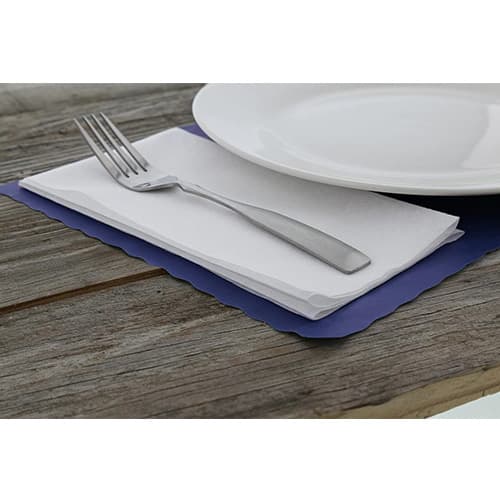
At delivery, proper tray setup matters. A professionally dressed tray — including a clean tray stand, neatly folded napkins, and organized serviceware — reflects the property’s F&B standards and is assessed on Forbes-aligned audits. Tabletop and guest presentation supplies such as traymats and cloth-like napkins are standard components of a well-executed room service setup.
Sustainability Considerations
Forbes Travel Guide quality checklists now explicitly verify the availability of sustainably sourced items and active efforts to reduce single-use plastics on room service trays. Properties moving toward eco-friendly packaging for food and beverage delivery are aligned with both guest expectations and industry audit criteria.
Digital menus directly reduce the volume of single-use printed inserts — a small but measurable sustainability gain. Reducing menu complexity also lowers food waste by shrinking the number of ingredients that need to be stocked and rotated. For more on sustainable packaging in food and beverage operations, see Elevate Your Restaurant’s Eco-Friendly Practices with Sustainable Packaging Choices.
Who Manages the Room Service Menu
The Food & Beverage department owns room service operations. The executive chef formulates the menu based on what the kitchen can execute well across all dayparts. The F&B manager oversees pricing strategy, menu engineering, and service standards. Upselling during order-taking is a documented SOP expectation, and order communication runs through the hotel’s POS system.
Common Uses
Department & Usage: The room service menu is owned and managed by the Food & Beverage (F&B) department. The executive chef formulates the menu; the F&B manager oversees pricing, engineering, and service standards. It is used daily by room service staff to take orders by phone, tablet, or app, communicate with the kitchen via POS, and execute tray delivery to guest rooms. The menu is also a key document in Forbes Travel Guide in-room dining audits, where staff are evaluated on menu knowledge and upselling during order-taking.
Sustainability
Digital room service menus — via QR codes, in-room tablets, or hotel apps — eliminate the need for frequently replaced single-use printed inserts. Eco-friendly packaging for food and beverage delivery is an emerging industry expectation, with Forbes-aligned quality checklists now verifying efforts to reduce single-use plastics on room service trays. Reducing menu complexity (fewer SKUs) lowers food waste by minimizing the number of ingredients that need to be stocked and rotated. Smart inventory management tied to room service demand patterns supports further waste reduction.
Related Products