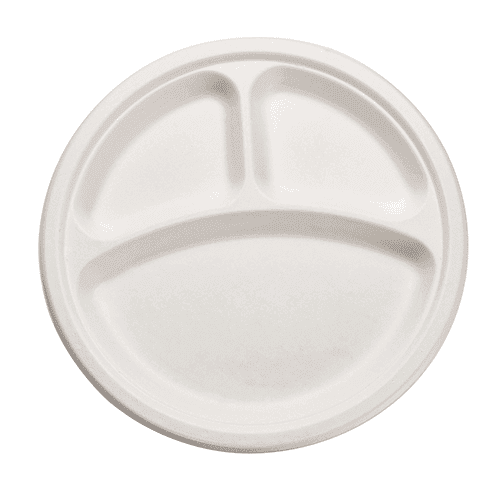
Bagasse
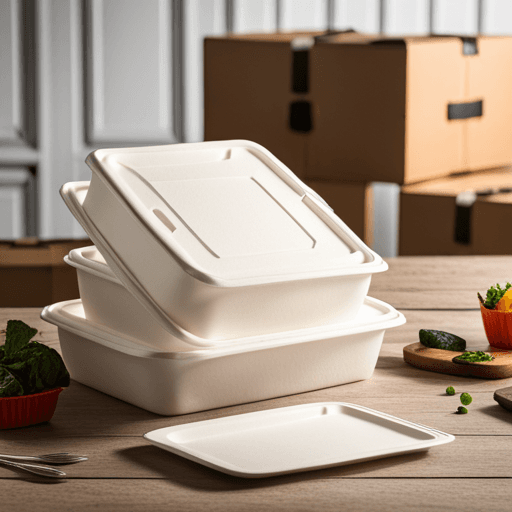
Bagasse is the fibrous residue that remains after juice is extracted from sugarcane stalks during sugar refining, containing 40-50% cellulose and used to manufacture compostable food packaging products including plates, containers, and trays.
Bagasse is the fibrous residue that remains after juice is extracted from sugarcane stalks during sugar refining. This agricultural by-product contains 40-50% cellulose along with hemicellulose and lignin, making it an ideal material for molded fiber food packaging.
How Bagasse Packaging is Made
Manufacturers convert bagasse into food packaging using high-temperature molding processes. The pulp is subjected to 356°F-392°F temperatures and 290-725 psi pressure to form plates, containers, and trays. This process requires no virgin resources—production of 100 tons of sugarcane yields approximately 30 tons of bagasse, with global bagasse production averaging 54 million tons annually.
The manufacturing efficiency surpasses wood-based paper production significantly. Bagasse requires only 1.5 tons of sugarcane pulp to produce 1 ton of packaging material, while traditional paper needs 5 tons of wood for the same output.
Performance Characteristics for Food Service
Bagasse packaging delivers tensile strength of 10-20 MPa and compressive strength of 5-15 MPa depending on thickness and density. The material offers natural insulation with thermal conductivity of 0.03 to 0.04 BTU/(h·ft·°F), making it suitable for both hot and cold food applications.
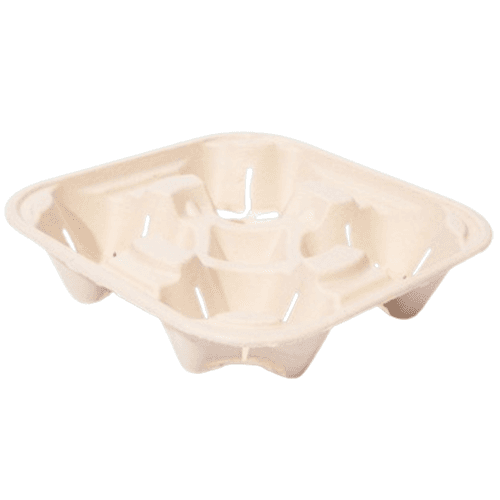
The material handles normal food service temperatures effectively. Bagasse maintains structural integrity through typical hot food applications, though temperatures above 95°C (203°F) may weaken the product. This makes it ideal for fiber plates, takeout containers, and beverage carriers.
Grease and Leak Resistance
Modern bagasse packaging offers natural grease and leak resistance suitable for oily and liquid foods. PFAS-free formulations achieve leak-proof performance through enhanced material density rather than chemical coatings. When purchasing, look for products specifically labeled “PFAS-free” to avoid harmful per- and polyfluorinated substances.
Required Certifications and Standards
Food-safe bagasse packaging must meet FDA Title 21 requirements in the United States and EU Regulation No. 10/2011 in Europe. These standards verify the material is safe for direct food contact without leaching contaminants.
For compostability verification, look for BPI (Biodegradable Products Institute) certification and compliance with ASTM D6400 or ASTM D6868 standards. European operations should verify EN 13432 certification, which requires 90% biodegradation within 6 months and complete disintegration within 12 weeks. TÜV Austria and AS 4736 (Australia) provide additional regional certifications.
Disposal and End-of-Life
Bagasse packaging is certified compostable, not recyclable through standard paper recycling streams. The material breaks down completely in 60-90 days when processed in commercial composting facilities. It requires specialized composting infrastructure—standard municipal composting may not provide the necessary heat and microbial activity.
Unlike PLA (Polylactic Acid), which also requires commercial composting, bagasse breaks down without leaving toxic residue. Ensure your waste management provider accepts certified compostable food packaging before switching to bagasse products.
Cost and Market Considerations
The global bagasse packaging market reached $274 million in 2022 and is projected to hit $514 million by 2031, growing at 6.7% annually. This growth reflects increasing demand from restaurants and foodservice operators seeking plastic alternatives without sacrificing performance.
Bagasse packaging typically costs 15-30% more than traditional foam or plastic containers but offers significant sustainability advantages. Volume purchasers can negotiate better pricing, and many operators find customer preference for eco-friendly packaging justifies the premium.
Choosing Bagasse for Your Operation
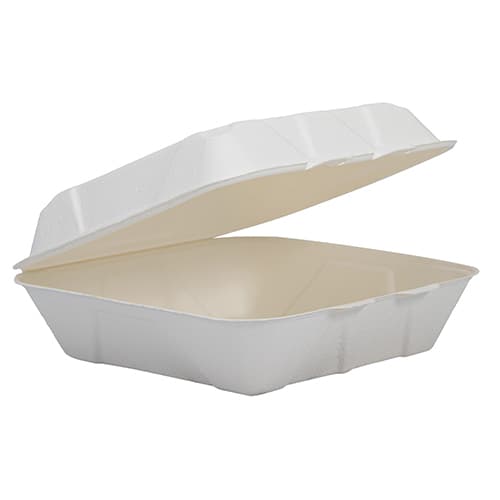
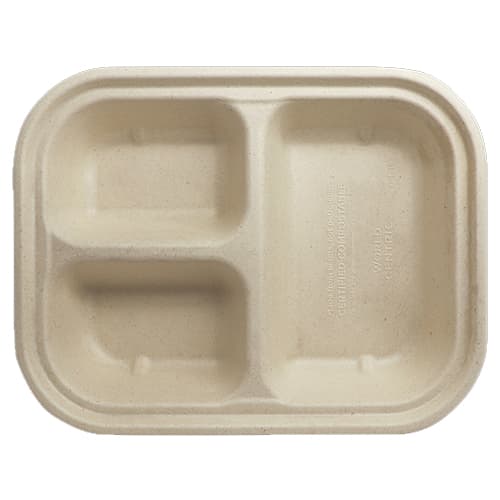
Bagasse works best for operations with access to commercial composting and customers who value sustainability. It’s particularly suitable for clamshell containers, food trays, and eco-friendly cups where heat resistance and structural integrity matter.
When sourcing, verify BPI certification, confirm PFAS-free formulation for grease resistance, and ensure your local waste management accepts the material. Standard sizes match conventional disposables, simplifying the transition from plastic or foam packaging.
Key Properties
Common Uses
Bagasse packaging serves diverse food service applications including disposable plates, takeout containers, clamshells, food trays, bowl products, and beverage carriers. The material's heat resistance and insulation properties make it ideal for both hot foods (soups, entrees, fried items) and cold applications (salads, desserts, beverages). Restaurants, catering operations, food trucks, institutional cafeterias, and event services use bagasse products as direct replacements for foam and plastic disposables. The material performs particularly well for oily and liquid foods when manufactured with PFAS-free grease-resistant formulations. Common sizes match industry-standard dimensions for plates (6"-10"), hinged containers (6"-9"), and compartment trays, simplifying transitions from conventional packaging.
Sustainability
Bagasse represents one of the most sustainable packaging materials available, repurposing agricultural waste that was previously discarded or burned. Production requires no dedicated farmland, virgin timber, or additional water resources beyond existing sugarcane processing. The material is 100% biodegradable and certified compostable, breaking down completely in 60-90 days in commercial composting facilities without toxic residue—a stark contrast to plastic packaging that persists for hundreds of years. Bagasse production delivers significantly lower carbon footprint compared to virgin materials and petrochemical-based alternatives. The global supply of 54 million tons annually from sugarcane processing supports circular economy principles by converting waste into value-added products. When disposed properly through commercial composting infrastructure, bagasse returns nutrients to soil rather than contributing to landfill accumulation. PFAS-free bagasse options eliminate harmful per- and polyfluorinated substances, addressing growing concerns about chemical contamination in food packaging. Note that bagasse is not suitable for standard paper recycling streams and requires commercial composting facilities for proper end-of-life processing.