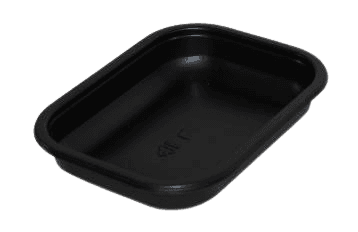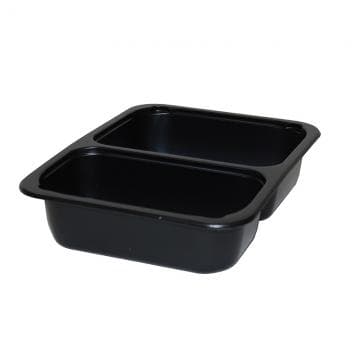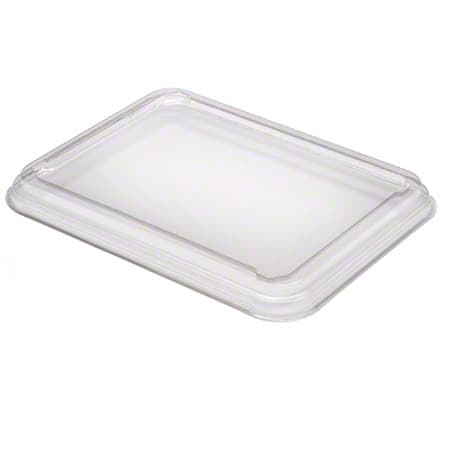
CPET (Crystallized Polyethylene Terephthalate)
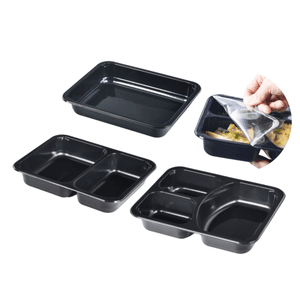
CPET (Crystallized Polyethylene Terephthalate) is a specialized form of PET plastic that has been heat-treated to increase crystallinity, creating an opaque material that can withstand extreme temperatures from -40°F (-40°C) to 428°F (220°C), making it suitable for freezer-to-oven and microwave applications.
CPET (Crystallized Polyethylene Terephthalate) is a heat-treated form of PET plastic that can withstand temperatures from -40°F to 428°F, making it safe for freezer-to-oven and microwave applications. Unlike standard clear PET, CPET undergoes a crystallization process that creates a tighter molecular structure, resulting in an opaque material (typically white or black) with superior thermal stability and dimensional strength.
How CPET Differs from Standard PET
The crystallization process is what sets CPET apart from regular PET plastic. During manufacturing, CPET is heat-treated to increase its crystallinity from around 7% (standard PET) to 30-50%. This structural change makes the material opaque and dramatically improves its heat resistance.
Standard clear PET softens and deforms at temperatures above 160°F, limiting its use to cold or room-temperature applications. CPET maintains rigidity up to 428°F, allowing it to go directly from freezer to conventional oven without warping or releasing harmful substances.
Temperature Range and Dual Ovenable Properties
CPET containers handle extreme temperature swings that would destroy most plastics. They remain stable at -40°F for frozen storage and can be safely heated to 400-428°F in conventional ovens or microwaves. This dual ovenable capability means a single container can store, freeze, reheat, and serve food without transferring to another dish.
The material’s low moisture absorption (less than 0.5%) prevents ice crystal formation during frozen storage. CPET maintains its structural integrity even after multiple freeze-thaw cycles, making it ideal for meal prep operations and airline catering where containers may be frozen, thawed, and reheated multiple times.
Food Safety and Regulatory Compliance
CPET is FDA approved for food contact under 21 CFR 177.1520, which specifically addresses polyethylene terephthalate for high-temperature applications. The material is BPA-free, does not contain phthalates or plasticizers, and is designated Generally Recognized As Safe (GRAS) by the U.S. FDA for direct food contact.
EFSA (European Food Safety Authority) has also approved CPET for food contact in European markets. The material’s chemical stability means it does not leach harmful substances during heating or normal use, even at maximum operating temperatures.
Barrier Properties and Food Protection
CPET provides excellent barriers against oxygen, water vapor, and grease. These properties extend food shelf life by preventing oxidation and moisture migration. The material’s high impact strength protects contents during transport and maintains rigidity even at low freezer temperatures.
The tight molecular structure created during crystallization prevents flavor and odor transfer between foods. This makes CPET particularly valuable for storing strong-flavored items or meals with multiple components that need to remain distinct.
Common Foodservice Applications
CPET containers dominate the ready-to-eat meal market because they eliminate the need for dish transfers. Customers can store meals in the freezer, then reheat directly in the microwave or oven. This convenience drives adoption in meal prep services, ghost kitchens, and retail frozen meal programs.
Airlines use CPET trays extensively because they can be safely heated in galley ovens at high altitudes. The containers’ light weight (compared to aluminum) reduces fuel costs while maintaining the durability needed for airline service. Catering operations favor CPET for events where food must be held hot or reheated on-site.
Explore CPET containers in various sizes and compartment configurations.
Sustainability and Recycling
CPET carries the #1 recycling code and is compatible with existing PET recycling streams. While the crystallization process changes the material’s physical properties, it does not alter its chemical structure, so CPET can be recycled alongside standard PET bottles and containers in most curbside programs.
Manufacturers now produce CPET containers with up to 70% post-consumer recycled (PCR) content. The material can be recycled into new food-grade products repeatedly without significant degradation. CPET’s lower carbon footprint compared to aluminum and its elimination of single-use scenarios (due to reusability) make it a sustainability choice for operations tracking environmental metrics.
For alternative sustainable materials, see our glossary entry on PLA (Polylactic Acid).
Buying Considerations for Foodservice Operations
CPET containers cost 15-30% more than standard plastic containers but eliminate the need for multiple container types in your operation. A single CPET container replaces storage containers, reheating vessels, and serving dishes. Calculate total cost by considering reduced inventory complexity and improved customer convenience.
Standard sizes range from 12 oz single-portion containers to 45 oz family-size options. Multi-compartment designs (2-comp and 3-comp) maintain portion control and keep menu components separated. Black containers absorb heat more efficiently for faster reheating, while white containers reflect heat and are preferred for delicate items.
Verify that lids are compatible with your chosen containers. Clear PET lids provide product visibility for retail applications, while matching CPET lids offer better insulation for hot-hold scenarios. Lids should seal securely to prevent leaks during transport and storage.
Key Properties
Common Uses
CPET containers are widely used for ready-to-eat meals, frozen meal programs, meal prep services, airline catering, hot-fill applications, and food delivery operations. The material's dual ovenable properties make it ideal for any application where food needs to be stored frozen and reheated in a microwave or conventional oven without transferring to another dish. Ghost kitchens and virtual restaurants use CPET for takeout meals that customers can reheat at home, while catering operations rely on CPET for events requiring on-site food heating.
Sustainability
CPET is fully recyclable under the #1 PET recycling code and is compatible with existing PET recycling streams accepted in most curbside programs. The material can contain up to 70% post-consumer recycled (PCR) content and can be recycled into new food-grade products repeatedly without significant degradation. CPET does not release harmful substances during heating or normal use, and its reusability eliminates the need for multiple single-use containers. The material has a lower carbon footprint compared to aluminum alternatives and supports circular economy principles through its recyclability and PCR content capabilities.