
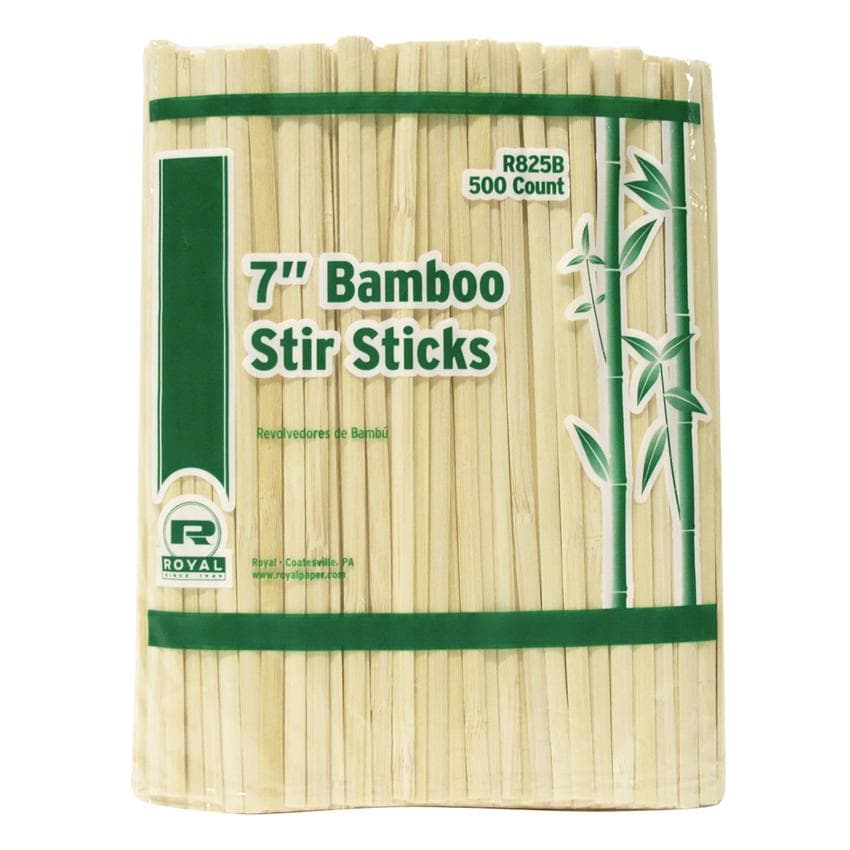
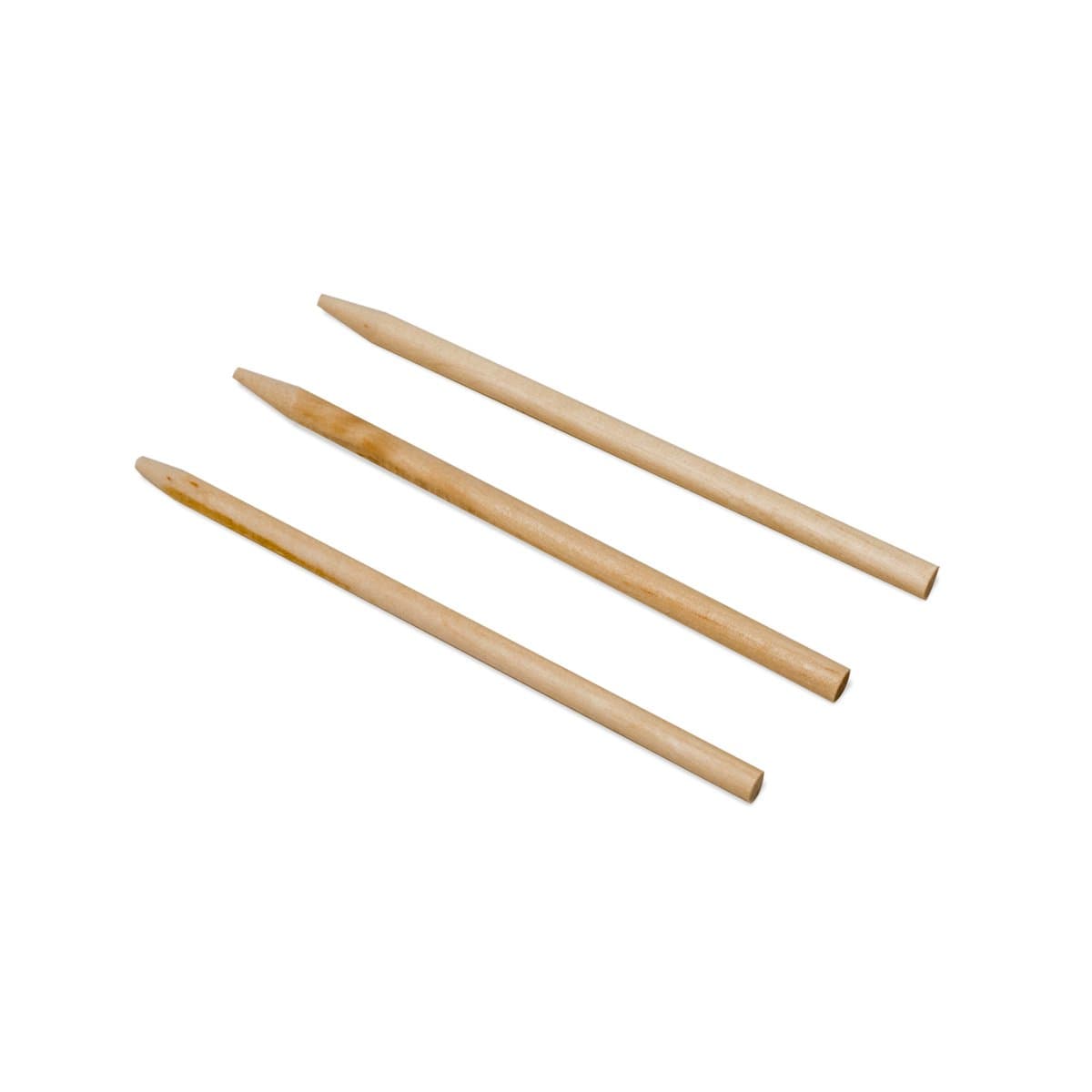
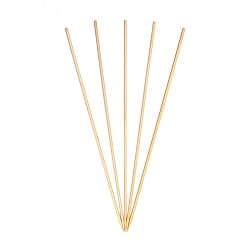
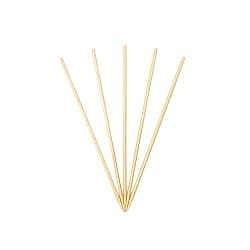
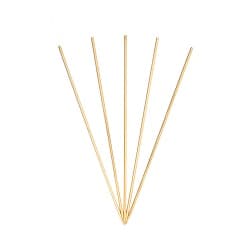
AmerCare Royal R831 5 1/2" Eco-Friendly Extra-Thick Wood Skewer
About Bamboo
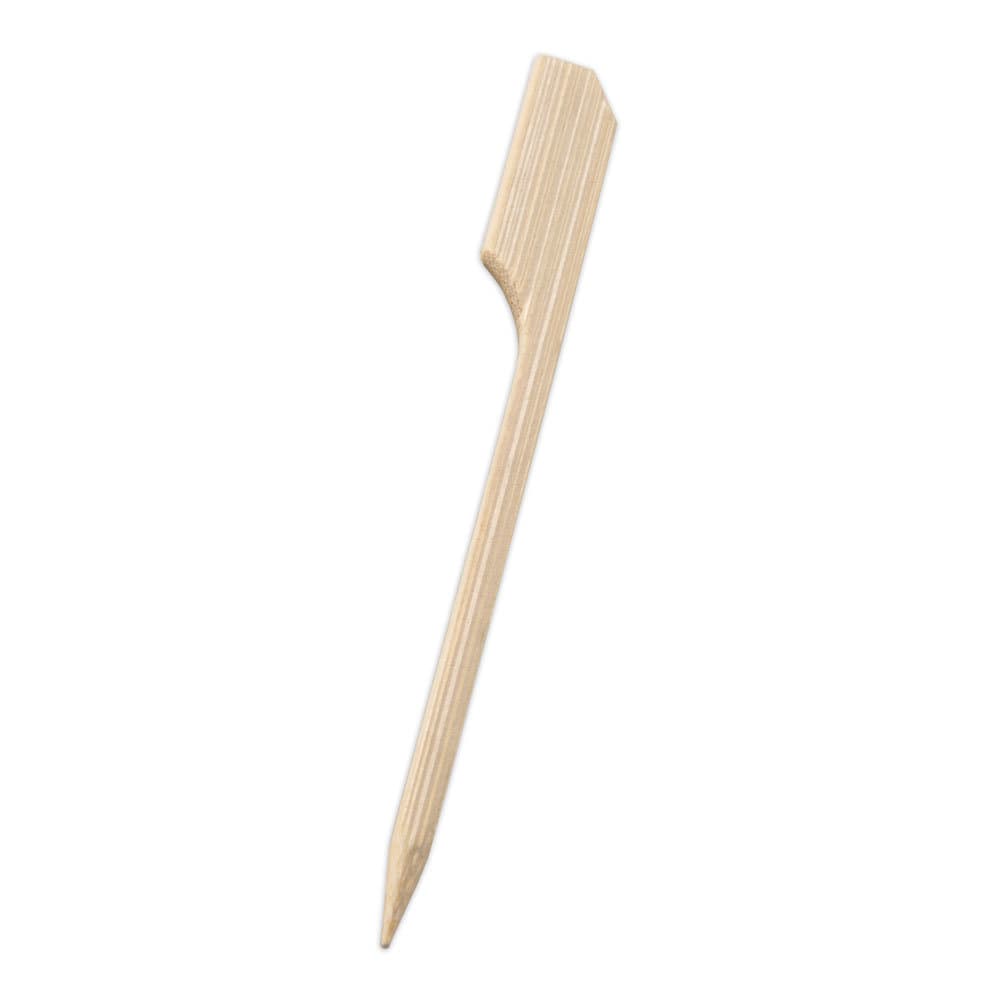
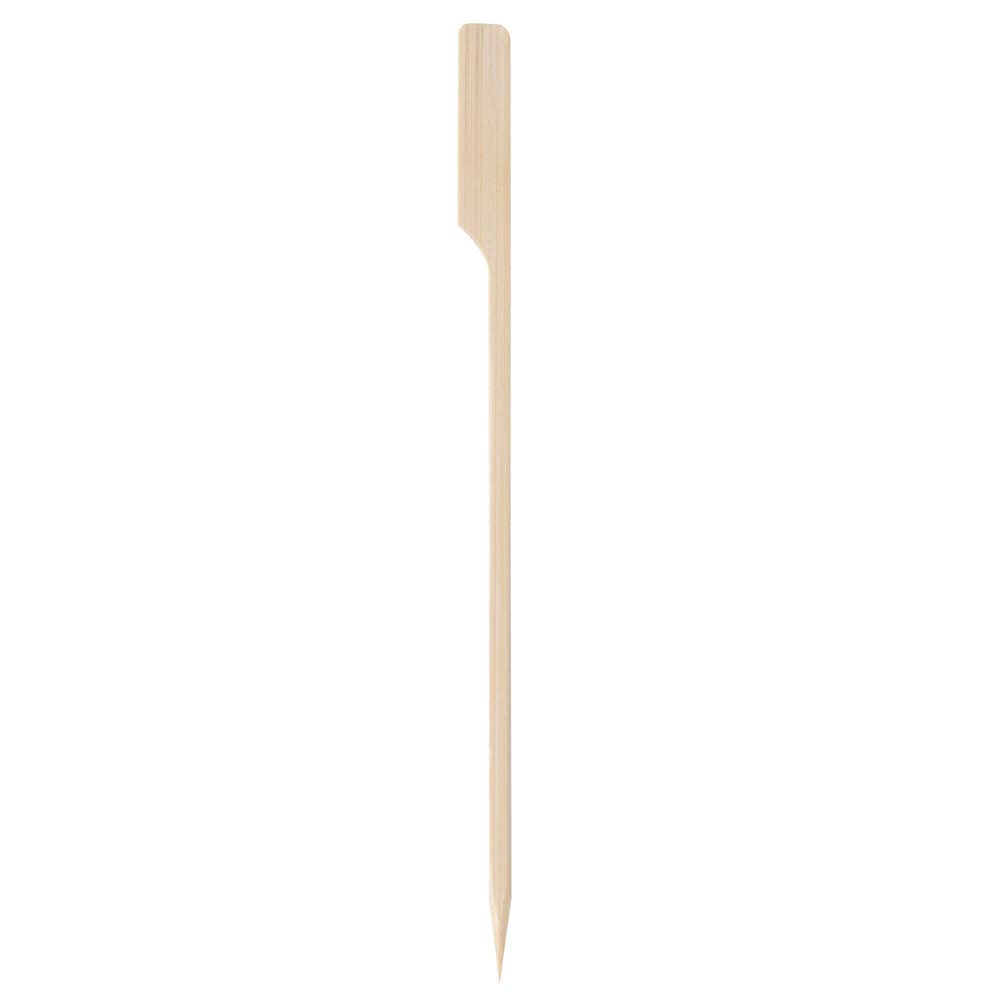
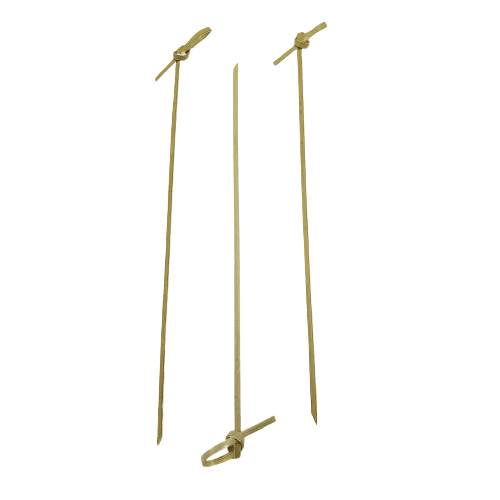
Bamboo packaging and disposables are widely used in foodservice for skewers, picks, stirrers, and serving utensils. Restaurants, caterers, coffee shops, and food trucks choose bamboo for its natural strength, heat resistance, and eco-friendly profile that appeals to sustainability-focused customers.
What it handles
Bamboo tolerates high heat and is safe for oven, microwave, and freezer use, making it suitable for both cold service and heated applications. The natural fiber structure provides rigidity for skewering and stirring while maintaining composure when exposed to moisture and moderate grease. Bamboo holds up well in hot beverages and with room-temperature foods, though prolonged soaking will eventually soften the material.
How it compares
Bamboo offers a more sustainable alternative to plastic picks and stirrers, with comparable strength and a natural aesthetic that enhances presentation. Unlike birch or hardwood skewers, bamboo grows rapidly and regenerates without replanting, making it a lower-impact choice. The tradeoff is that bamboo can be slightly more prone to splintering than some plastics, and the natural material shows more variation in color and grain.
Choosing Bamboo
Consider these factors when selecting bamboo products for your operation.
- Match length to application: Choose shorter picks (4.5"–6") for appetizers and garnishes, longer skewers (8"–10") for kebabs and grilled items that need handling clearance.
- Check diameter for load: Thicker bamboo skewers handle heavier proteins and dense vegetables better than standard-gauge picks, which work best for lighter applications.
- Plan for disposal access: Bamboo is compostable and recyclable, but verify your waste hauler accepts food-contact compostables or set up a separate collection stream.
- Store in dry conditions: Keep bamboo products sealed and away from humidity to prevent warping or premature softening before use.
Frequently asked questions
- Is Bamboo microwave safe?
- Yes, bamboo is microwave safe and can withstand microwave heating without degrading or releasing harmful substances. Use bamboo skewers and stirrers for reheating applications, though extended microwave exposure may dry out the material.
- Is Bamboo compostable?
- Yes, bamboo is compostable and will break down in commercial composting facilities. As a natural plant fiber, bamboo decomposes fully when exposed to the right combination of heat, moisture, and microbial activity.
- Can Bamboo go in the oven?
- Yes, bamboo is oven safe and can tolerate typical cooking temperatures without burning or releasing fumes. Bamboo skewers are commonly used for broiling and baking, though soaking them before high-heat grilling helps prevent charring.
- What is Bamboo made from?
- Bamboo foodservice products are made from the woody stems of bamboo grass, harvested and processed into skewers, picks, and stirrers. The raw material is a fast-growing, renewable plant that reaches maturity in 3–5 years without need for replanting.
- Is Bamboo recyclable?
- Yes, bamboo is recyclable in many municipal programs that accept paper and yard waste, though policies vary by region. Check with your local hauler, as food-contact bamboo may need to go through composting rather than traditional recycling streams.
- Can Bamboo be frozen?
- Yes, bamboo is freezer safe and maintains its structural integrity at freezing temperatures. Bamboo picks and skewers can be used to hold items for freezer storage or cold display without becoming brittle.