
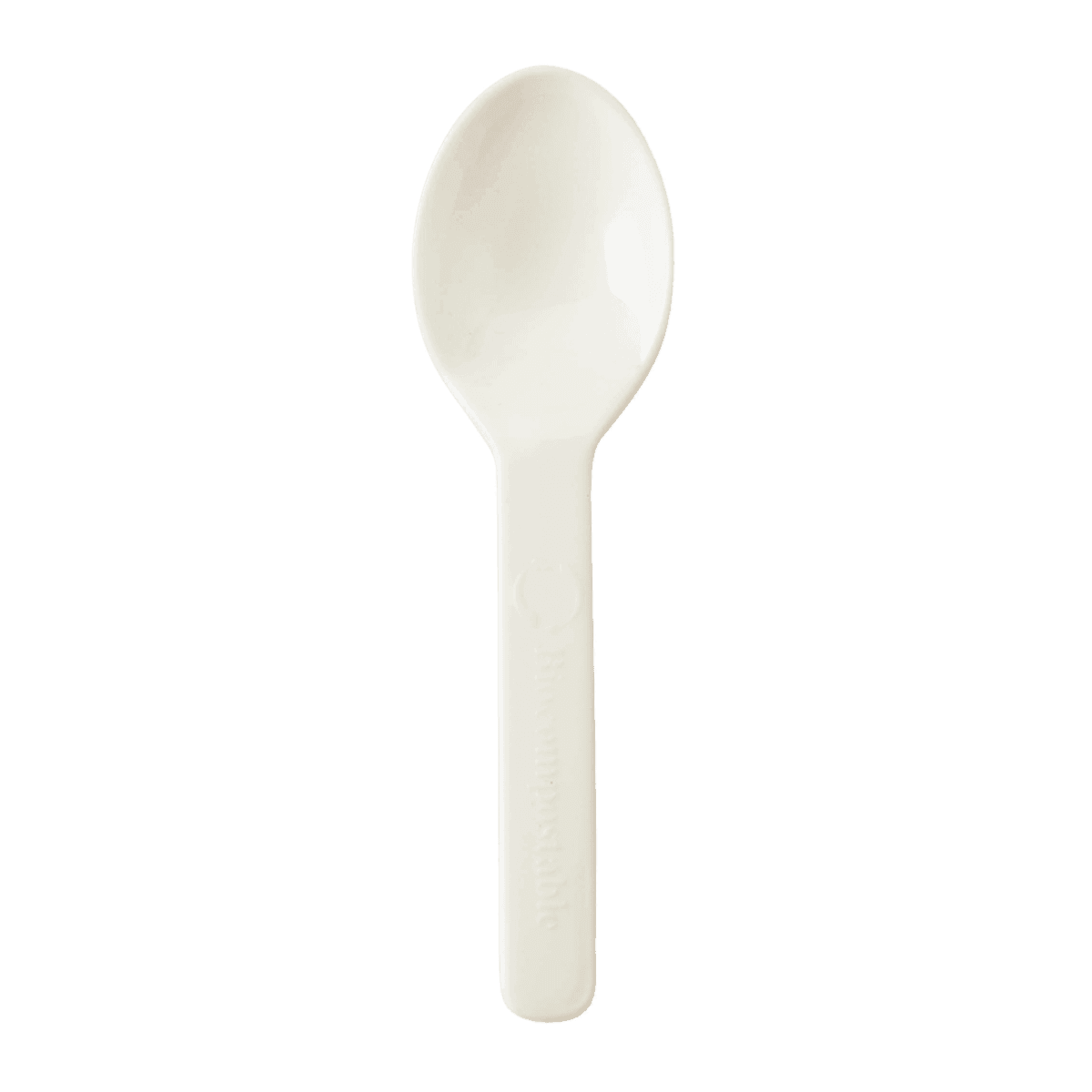
6" Compostable Cutlery Kit - Fork, Knife, Napkin
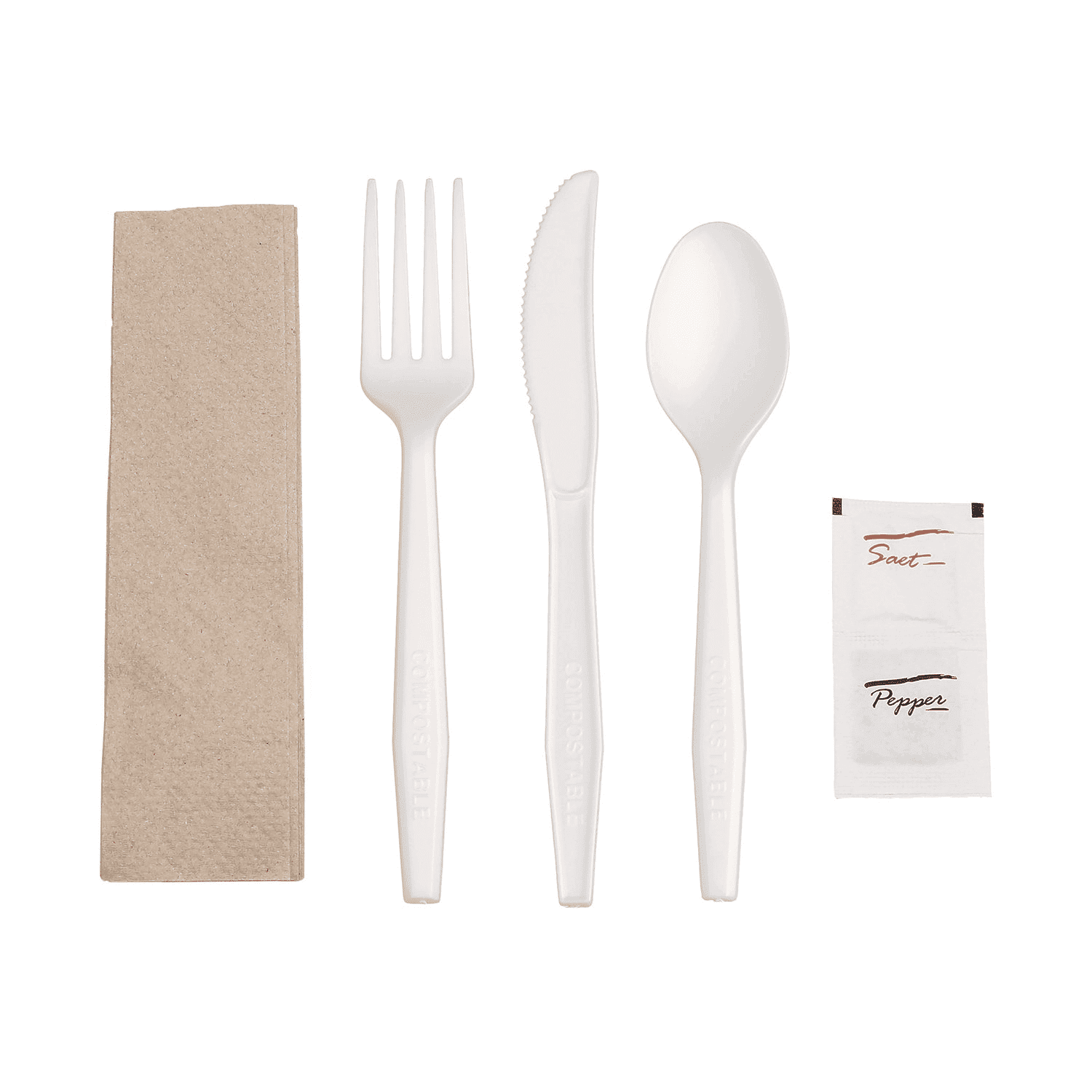
6" Compostable Cutlery Kit - Fork, Knife, Spoon, Napkin, S/P

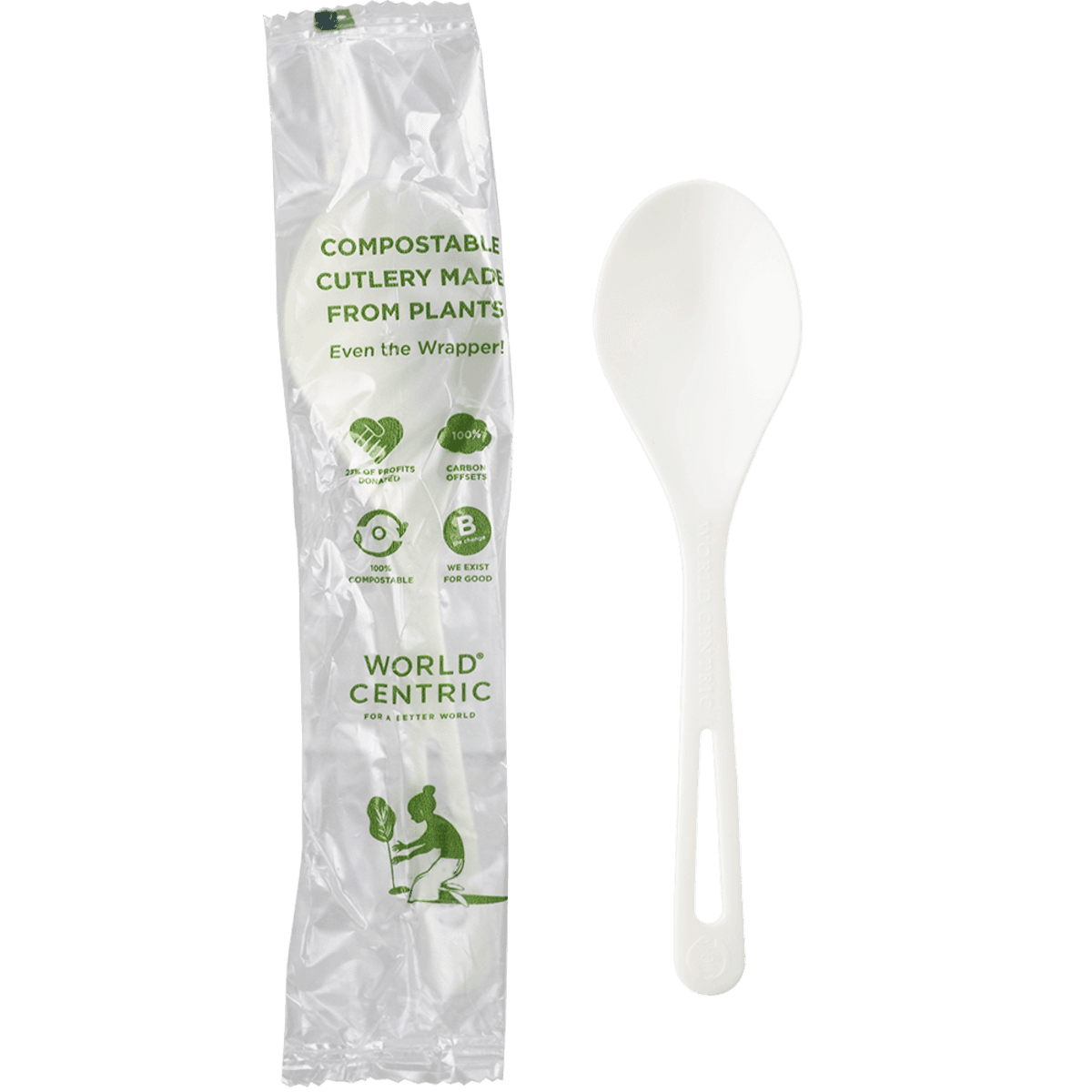
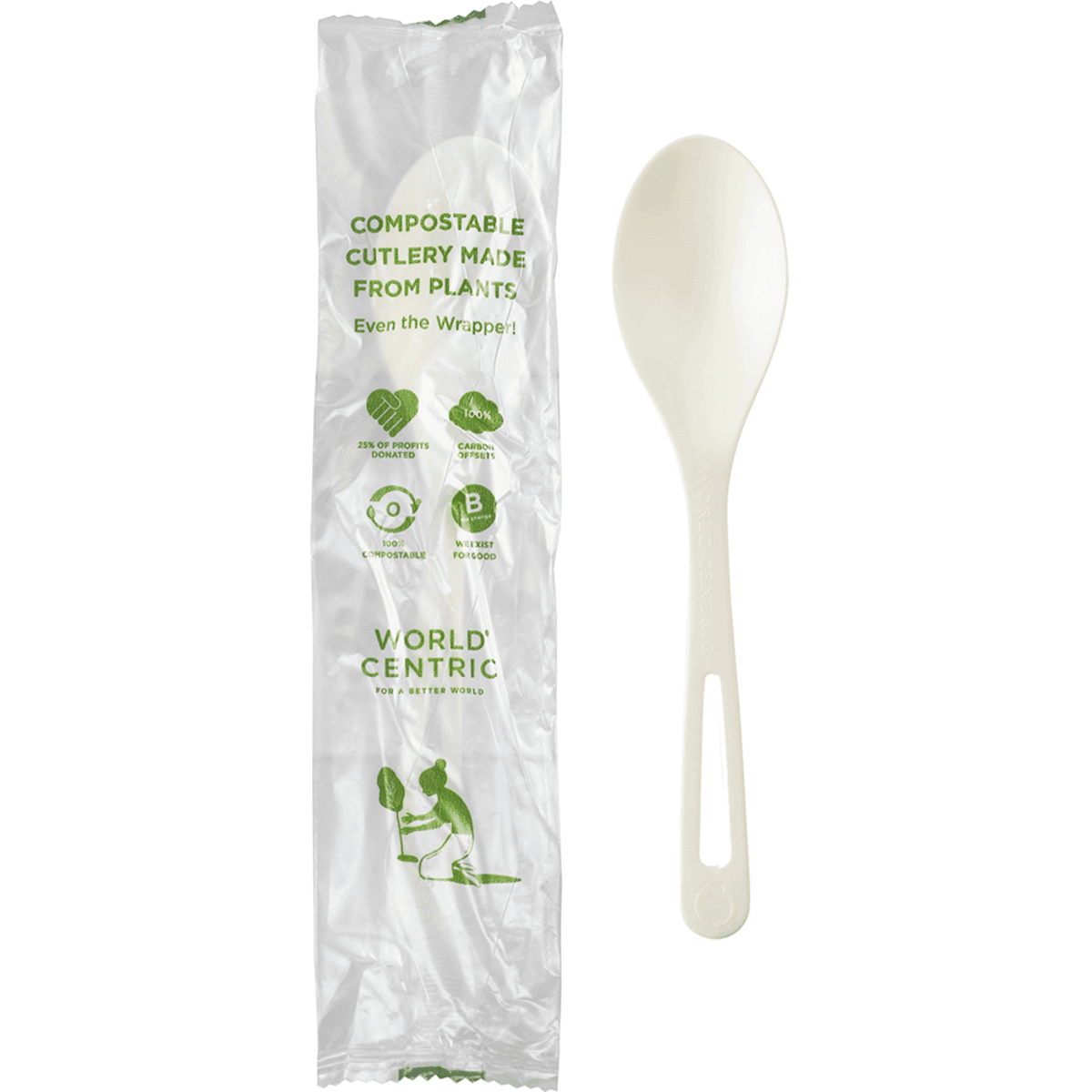


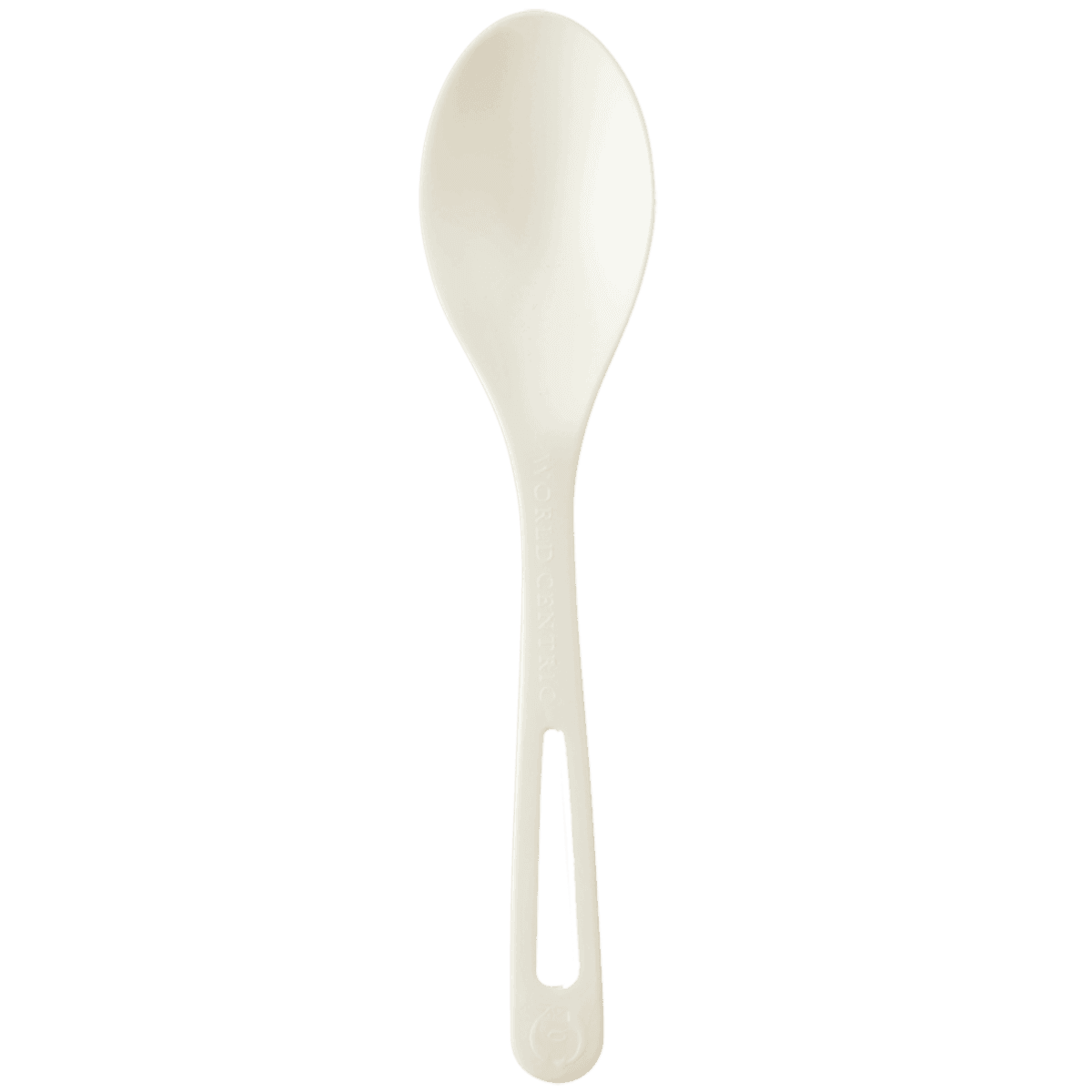
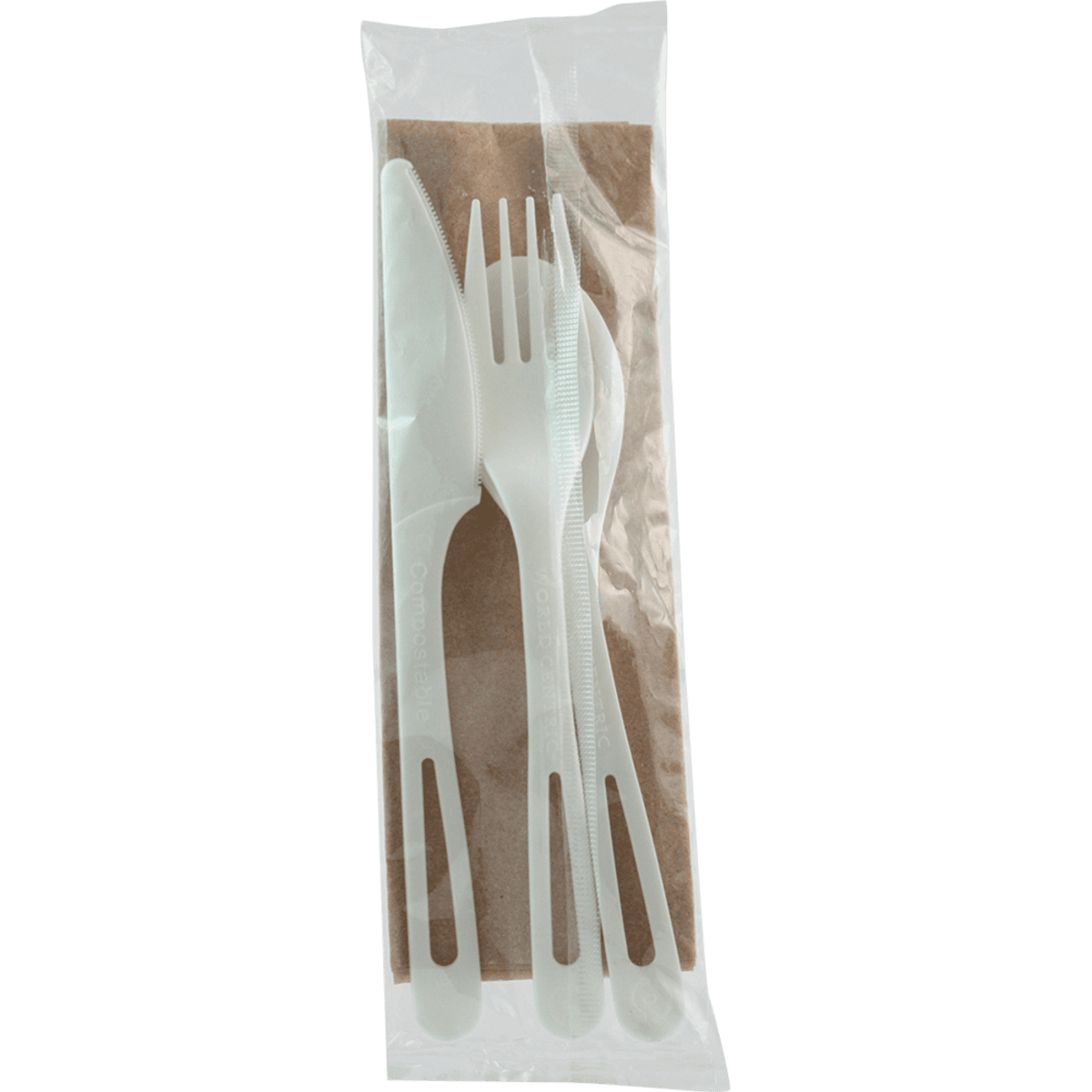
6” Wrapped Cutlery Kit - Fork, Knife, Spoon, Napkin
About Bioplastic - PLA
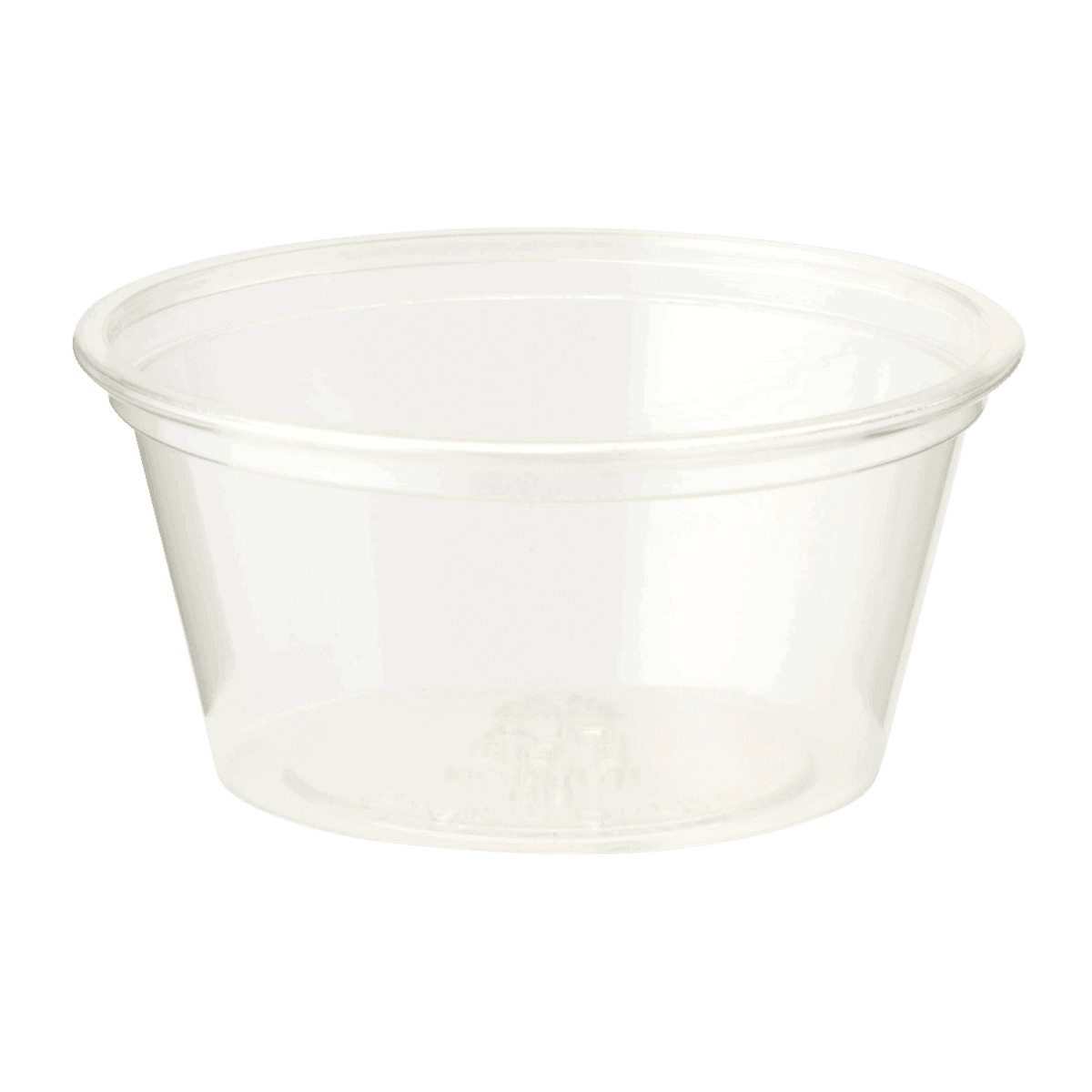
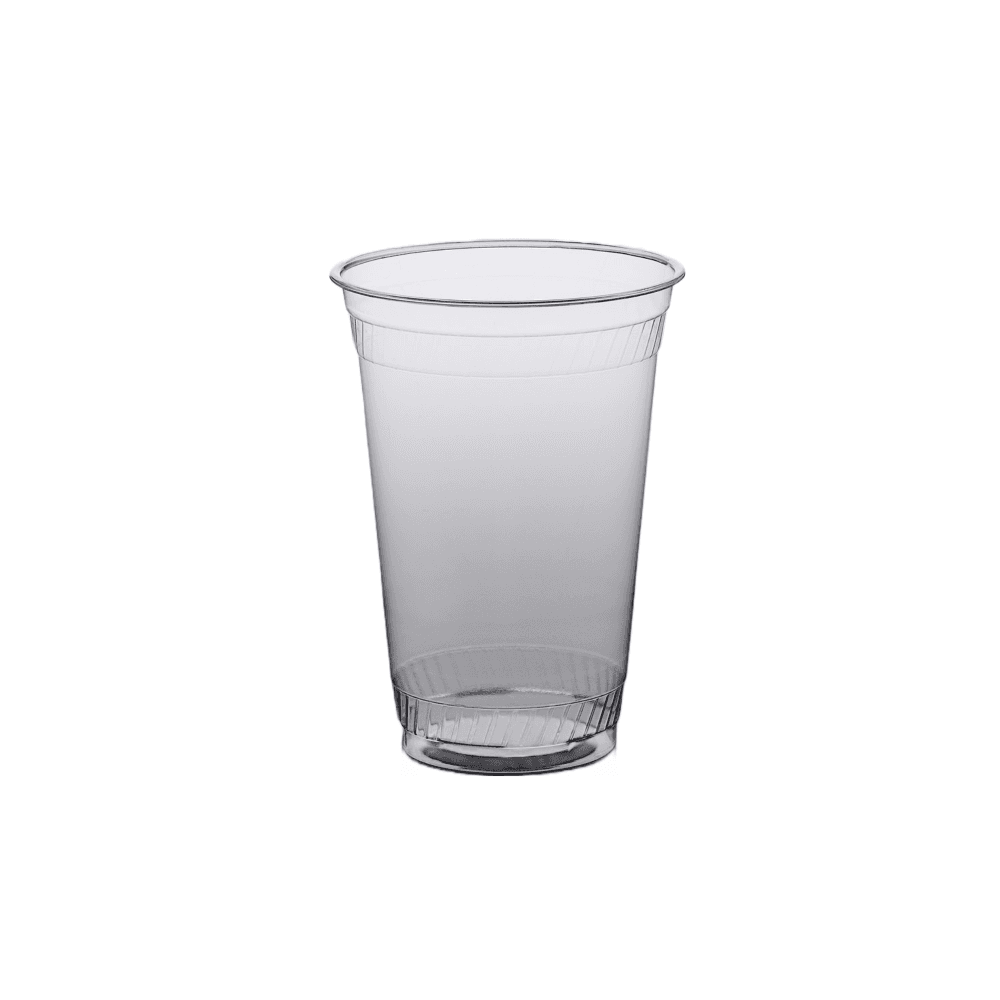
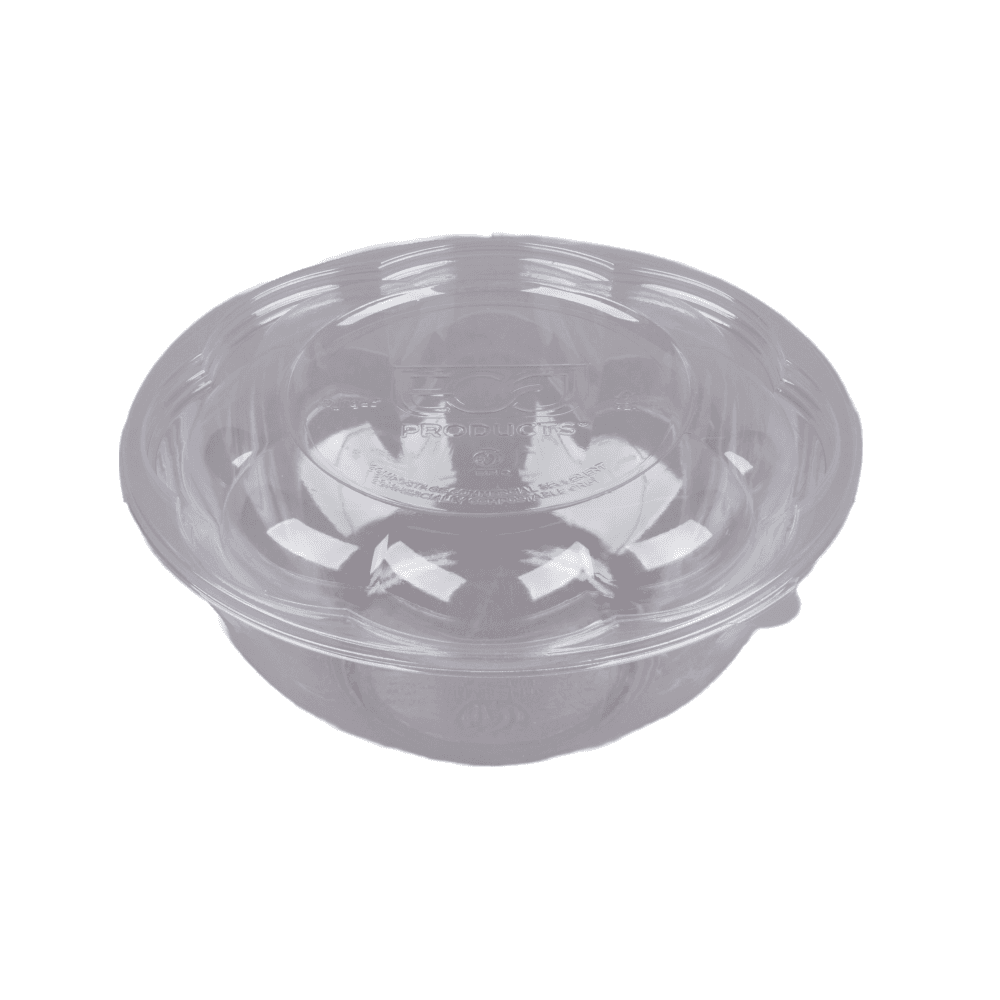
PLA (polylactic acid) bioplastic is a plant-based material used for cold food and beverage packaging in foodservice operations. Coffee shops, juice bars, catering companies, and quick-service restaurants choose PLA for cold cups, portion containers, utensils, and lids when compostability is a priority. This material handles cold applications where traditional petroleum-based plastics would otherwise be used.
What it handles
PLA performs well with cold and room-temperature foods and beverages but is not microwave, oven, or freezer safe. It handles moisture effectively for cold drinks and deli items but softens when exposed to heat above 110-120°F. The material provides clarity similar to conventional plastic while maintaining structural integrity for portion cups, cold cups, and cutlery at proper serving temperatures.
How it compares
PLA offers compostability that standard PET and polypropylene plastics cannot match, making it the choice when waste diversion is required. The tradeoff is temperature limitation—PLA cannot handle hot foods or liquids, while conventional plastics often can. For cold applications where composting infrastructure exists, PLA provides comparable clarity and performance to petroleum-based alternatives.
Choosing Bioplastic - PLA
Match PLA products to your operation's temperature requirements and waste handling capabilities.
- Cold applications only: Use PLA for cold beverages, salads, parfaits, and other items served below 110°F—never for hot coffee, soup, or heated foods.
- Confirm composting access: PLA requires commercial composting facilities to break down properly, so verify your waste hauler accepts compostable foodservice packaging before switching.
- CPLA for warm items: Look for crystallized PLA (CPLA) lids and utensils when you need slightly better heat tolerance for warm—but not hot—foods up to about 180°F.
- Storage conditions matter: Store PLA products in cool, dry conditions away from heat sources, as the material can warp or deform when exposed to elevated temperatures even before use.
- Match to customer expectations: PLA's clear appearance signals standard plastic to customers, so educate staff to communicate compostability and disposal instructions at point of service.
Frequently asked questions
- Is Bioplastic - PLA microwave safe?
- No, PLA is not microwave safe. The material will soften, warp, and potentially melt when exposed to microwave heat, making it unsuitable for reheating food.
- Is Bioplastic - PLA compostable?
- Yes, PLA is compostable in commercial composting facilities. It requires the elevated temperatures and controlled conditions of industrial composting operations to break down within the typical 90-180 day timeframe.
- Can PLA be used for hot foods or beverages?
- No, PLA is not oven safe and should not be used for hot foods or beverages. Standard PLA softens around 110-120°F, well below the temperature of hot coffee or soup, though crystallized CPLA versions can handle temperatures up to about 180°F.
- What is PLA bioplastic made from?
- PLA is made from fermented plant starches, typically corn, sugarcane, or cassava. The starches are converted into lactic acid and then polymerized into a thermoplastic material that can be molded into foodservice packaging.
- Can PLA packaging be recycled?
- No, PLA is not recyclable through standard plastic recycling streams. It must be separated and sent to commercial composting facilities, as mixing PLA with conventional plastic recycling can contaminate the entire batch.
- Is PLA freezer safe?
- No, PLA is not freezer safe. The material becomes brittle at freezing temperatures and can crack or shatter, making it unsuitable for frozen food storage or service.