
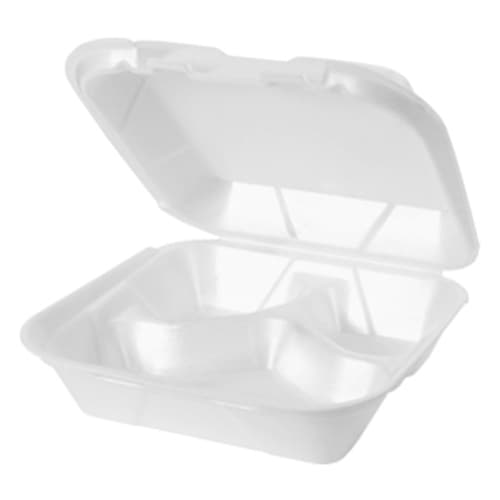
Genpak SN243-WHT 8 1/4" x 8" x 3" White Medium 3-Compartment Foam Snap-It Hinged Lid Container
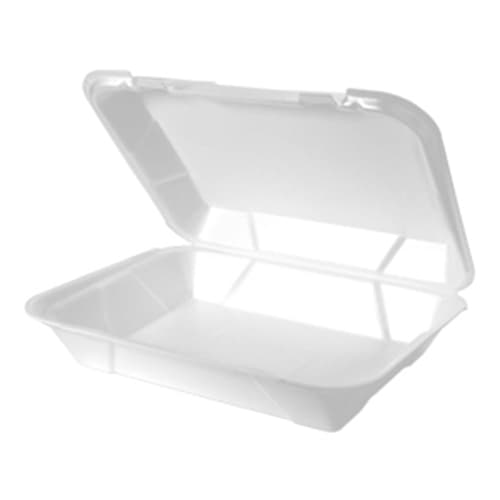

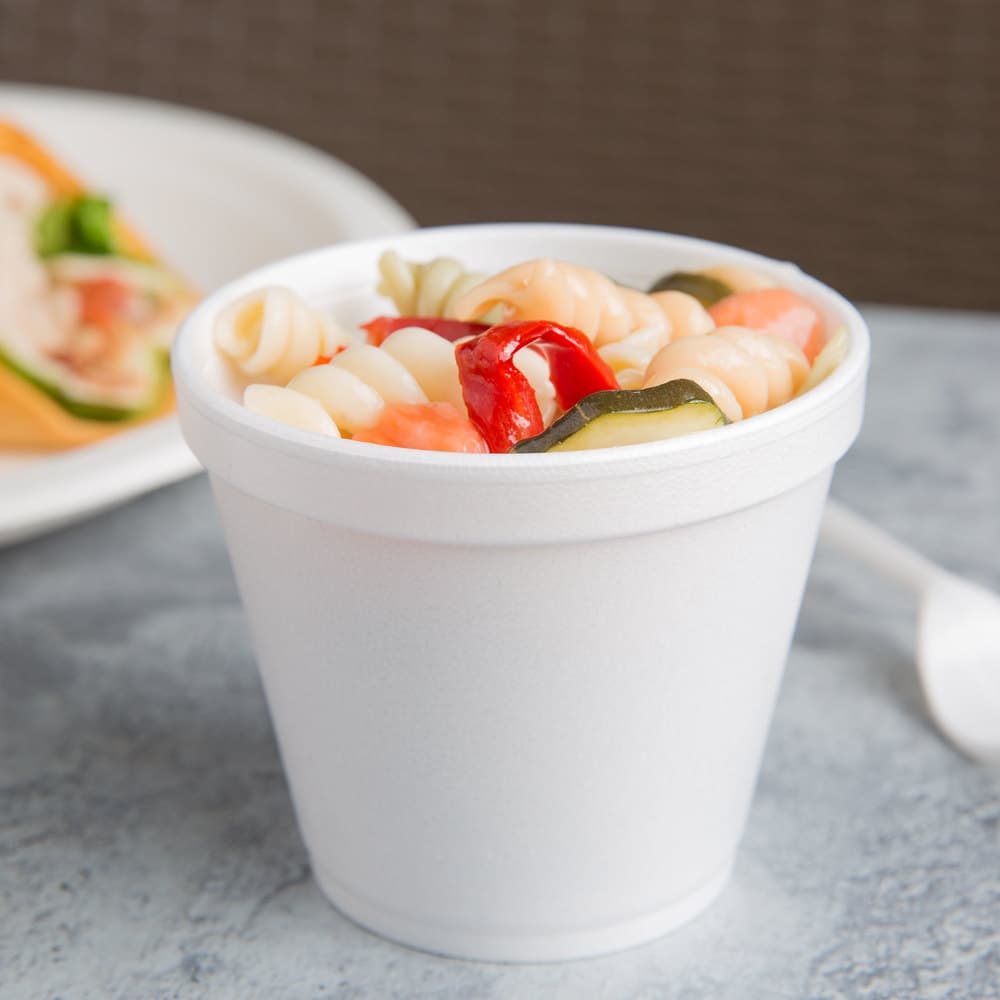
About Foam
Foam packaging is a workhorse material in foodservice, used primarily for takeout containers, clamshells, and beverage cups. Restaurants, diners, food trucks, and caterers rely on foam for its exceptional insulation properties and cost-effectiveness when serving hot meals, soups, and temperature-sensitive foods to go.
What it handles
Foam excels at thermal insulation, keeping hot foods hot and cold foods cold during transport and service. It's freezer safe, making it suitable for storing prepared meals, but it cannot be used in microwaves or ovens. The material provides good structural rigidity and resists moisture and grease penetration better than uncoated paper alternatives.
How it compares
Compared to fiber or plastic alternatives, foam offers superior insulation at a lower material cost, but it is not recyclable or compostable. Hinged foam clamshells provide better heat retention than standard plastic containers, though they take up more storage space. For operations prioritizing temperature control and budget over environmental disposal options, foam remains a practical choice.
Choosing Foam
Consider these factors when selecting foam packaging for your operation.
- Match container depth to food type: Shallow containers work for sandwiches and flatbreads, while 3-inch depths accommodate entrees with sides or stacked items without lid contact.
- Check compartment configuration: Single-compartment containers suit uniform dishes, while 3-compartment options keep proteins, sides, and sauces separated for plated-style takeout.
- Consider vented vs. non-vented lids: Vented lids release steam to prevent sogginess in fried foods and crispy items, while solid lids retain heat and moisture for braised dishes and soups.
- Verify color for branding: White containers present a clean, traditional look, while black options provide upscale appearance for premium menu items.
- Account for local regulations: Some municipalities have restricted or banned foam foodservice packaging, so verify compliance with local ordinances before committing to bulk orders.
Frequently asked questions
- Is Foam microwave safe?
- No, foam is not microwave safe. The material can melt or warp when exposed to microwave heat, potentially releasing compounds into food and damaging the container structure.
- Is Foam compostable?
- No, foam is not compostable. It will not break down in commercial or home composting systems and must be disposed of as solid waste.
- Can foam containers go in the oven?
- No, foam containers are not oven safe and will melt at oven temperatures. For reheating, food must be transferred to microwave-safe or oven-safe containers.
- What is foam food packaging made from?
- Foam food packaging is made from expanded polystyrene (EPS), a petroleum-based plastic that has been injected with air to create a lightweight, insulating cellular structure. The expansion process creates millions of tiny air pockets that provide the material's characteristic insulation and cushioning properties.
- Is foam recyclable?
- No, foam is not recyclable through standard municipal recycling programs. Most curbside and commercial recycling facilities do not accept foam foodservice packaging due to contamination and processing limitations.
- Can foam containers be used for freezer storage?
- Yes, foam containers are freezer safe and perform well for frozen food storage. The material maintains its structural integrity at freezing temperatures and provides insulation that helps protect food quality during frozen storage.