
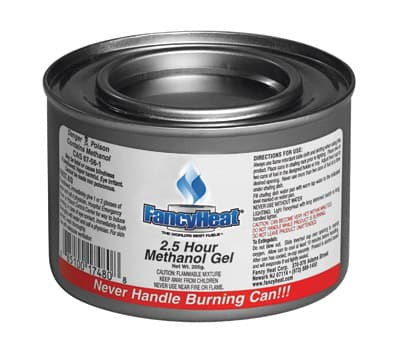
About Gel
Gel fuel products are used in foodservice for chafing dishes and buffet warming applications, providing consistent flameless heat for catering operations. Caterers, hotels, banquet facilities, and restaurants use gel heat sources to keep food at safe serving temperatures during events and buffet service. This material offers a portable heating solution that doesn't require electricity or open flames.
What it handles
Gel fuel is formulated to burn at controlled temperatures suitable for warming chafing dishes, typically maintaining food in the safe serving zone above 140°F. This material is not designed for cooking, reheating, or direct food contact—it serves exclusively as a heat source placed beneath buffet pans. Gel fuel is neither microwave safe, oven safe, nor freezer safe, as it functions solely as a standalone heating element.
How it compares
Compared to electric chafers or portable butane burners, gel fuel requires no power source or gas cartridges, making setup faster in venues without adequate electrical access. The tradeoff is that gel provides less precise temperature control than electric units and cannot be adjusted once lit. Gel cans also generate consumable waste after each use, whereas electric and butane systems involve reusable equipment.
Choosing Gel
Consider these factors when selecting gel fuel for your operation.
- Burn time matters: Match the gel canister's burn duration to your service length—a 2.5-hour gel works for standard buffet services, while longer events require extended-burn options.
- Calculate quantity needed: Plan for one gel canister per chafing dish burner, and keep extras on hand for services that run longer than expected.
- Ventilation requirements: Use gel fuel only in well-ventilated spaces, as combustion produces fumes that require adequate air circulation in indoor settings.
- Storage and shelf life: Store unopened gel canisters in a cool, dry location away from direct sunlight to maintain fuel quality and prevent evaporation.
- Disposal considerations: Gel fuel canisters are neither recyclable nor compostable, so factor disposal into your waste management plan for catered events.
Frequently asked questions
- Is Gel microwave safe?
- No, gel fuel is not microwave safe. Gel is a flammable heating fuel designed for use in chafing dish burners, not for placement in microwave ovens or any food preparation equipment.
- Is Gel compostable?
- No, gel fuel products are not compostable. Used gel canisters must be disposed of according to local regulations for flammable materials and cannot break down in composting systems.
- Can Gel be used in ovens or high-heat environments?
- No, gel fuel is not oven safe and should never be placed in ovens or other cooking equipment. Gel is formulated exclusively for use in designated chafing dish fuel holders beneath buffet pans, where it burns safely in open air.
- What is gel fuel made from?
- Gel fuel is typically made from methanol or ethanol alcohol combined with a gelling agent that creates a semi-solid consistency. This formulation allows the fuel to burn steadily without spilling like liquid fuel, providing controlled heat output for foodservice warming applications.
- Is Gel recyclable?
- No, gel fuel canisters are not recyclable. Both the residual fuel and the metal containers require disposal as hazardous waste or according to local fire safety regulations, not through standard recycling programs.
- Is Gel freezer safe?
- No, gel fuel is not freezer safe and should never be stored in freezers or used in cold storage. Gel fuel is a heat source intended only for warming applications and has no functional use in frozen or refrigerated environments.