
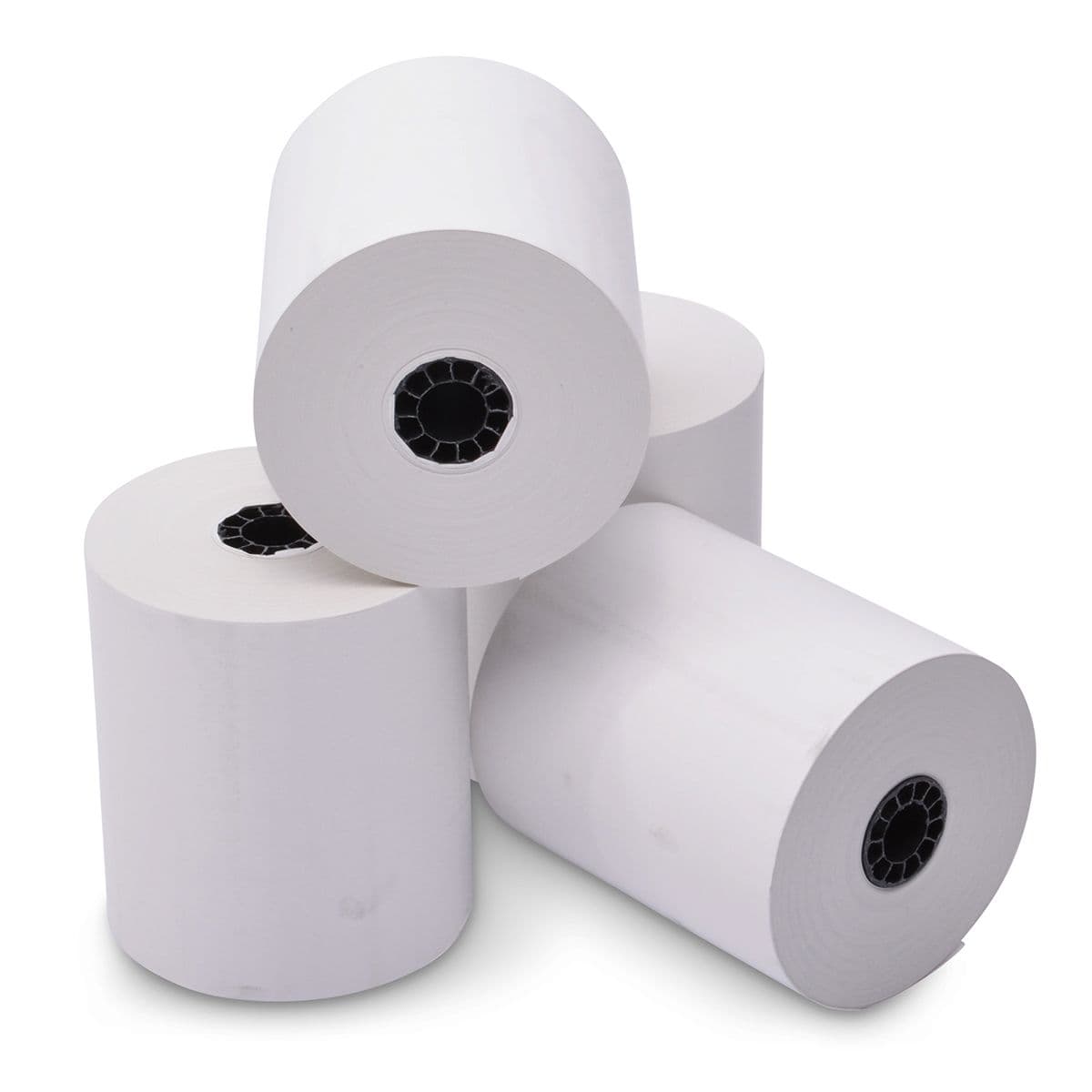
Iconex 9078-0668 Direct Thermal Printing Thermal Paper Rolls, 3.125" x 220 ft, White
About Thermal Paper
Thermal paper is the standard material for point-of-sale receipts, kitchen tickets, and order documentation in restaurants, coffee shops, bars, and food trucks. Its chemically-coated surface activates under heat from thermal printers, eliminating the need for ink cartridges or ribbons. Fast-paced foodservice operations rely on it for quick, consistent transaction records and order communication between front-of-house and kitchen staff.
What it handles
Thermal paper withstands freezer temperatures and brief microwave exposure without degrading, making it suitable for labeling frozen items or tickets that might pass through warming areas. It cannot tolerate direct oven heat and will darken or become illegible at high temperatures. The printed surface resists light moisture but can fade over time when exposed to oils, heat, or prolonged sunlight.
How it compares
Standard bond paper requires ribbon or ink-based printers, adding supply costs and maintenance, while thermal paper prints instantly with heat-activated chemistry. Thermal receipts fade faster than ink-printed documents, especially under heat or UV exposure, making them less suitable for long-term record storage. The tradeoff is speed and simplicity at the point of sale versus durability for archival purposes.
Choosing Thermal Paper
Match roll specifications to your printer and storage needs.
- Verify printer compatibility: Check your thermal printer's specifications for roll width and diameter to avoid jams or poor print quality.
- Consider print longevity: Store duplicate records digitally or on standard paper if receipts must remain legible beyond a few months.
- Calculate roll capacity: Longer rolls reduce the frequency of changeovers during peak service hours, improving kitchen and counter efficiency.
- Protect from heat sources: Keep unused rolls away from cooking equipment, direct sunlight, and warm storage areas to prevent premature darkening.
- Test with your equipment: Run sample rolls through your printers before committing to bulk orders to confirm feed mechanics and print clarity.
Frequently asked questions
- Is Thermal Paper microwave safe?
- Yes, thermal paper is microwave safe for brief exposures. The paper itself will not ignite or release harmful substances, though prolonged heat may darken the printed image.
- Is Thermal Paper compostable?
- No, thermal paper is not compostable. The chemical coating that enables heat-activated printing prevents breakdown in commercial or backyard composting systems.
- Can Thermal Paper go in the oven?
- No, thermal paper is not oven safe. Direct oven heat will cause the chemically-treated surface to darken completely, rendering any printed information illegible.
- What is Thermal Paper made from?
- Thermal paper consists of a paper base coated with a heat-sensitive chemical layer, typically containing dyes and developers that react to produce visible marks when heated by a thermal print head. This coating eliminates the need for separate ink or toner.
- Is Thermal Paper recyclable?
- No, thermal paper is not recyclable. The chemical coating interferes with standard paper recycling processes and contaminates recycling streams.
- Is Thermal Paper freezer safe?
- Yes, thermal paper is freezer safe and maintains its structural integrity at low temperatures. However, condensation from temperature changes may cause printed text to smudge or fade over time.