Vacuum Sealer
A vacuum sealer is a commercial foodservice equipment unit that removes air from a specially designed bag or container and creates an airtight heat seal, extending the shelf life of perishable ingredients and enabling techniques like sous vide cooking, batch portioning, and rapid marination.
A vacuum sealer is a piece of commercial foodservice equipment that extracts air from a specially designed bag or container and creates an airtight heat seal around the food — a process also known as vacuum packing. By removing oxygen from the package, vacuum sealing halts oxidation, inhibits aerobic bacterial and fungal growth, and dramatically extends shelf life. Vacuum-packed perishables like meats and fish can last two to three times longer in the freezer compared to conventionally stored alternatives.
Chamber vs. External Vacuum Sealers
Commercial kitchens rely on two primary vacuum sealer types: chamber vacuum sealers and external (suction-edge) vacuum sealers. Understanding the difference is essential before purchasing, because the wrong type for your operation will limit what you can seal and how fast you can work.
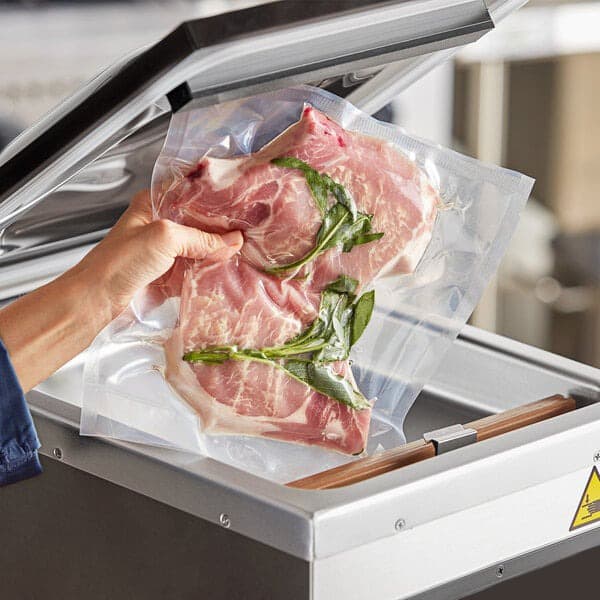
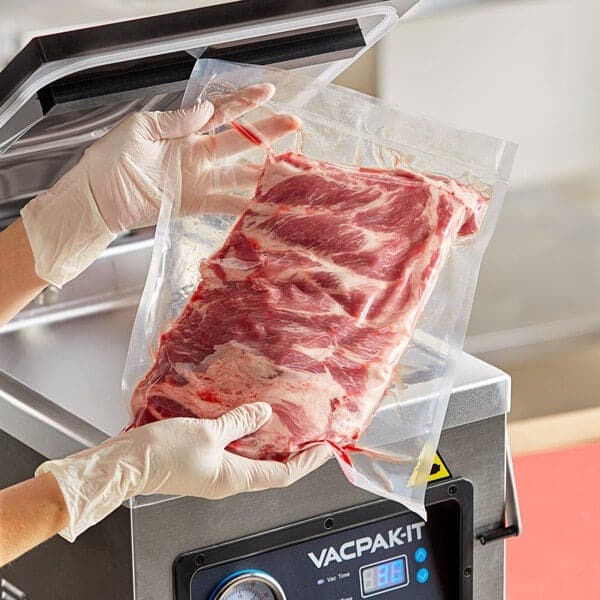
Chamber vacuum sealers are the professional standard for high-volume operations. The entire filled bag is placed inside a sealed chamber; the machine evacuates air from both the chamber and the bag simultaneously, then a heat bar seals the bag before the chamber repressurizes. This design makes chamber sealers capable of handling liquids, soups, sauces, and marinades — a critical advantage in a commercial kitchen. Seal bar lengths on commercial chamber machines range from approximately 10″ to 27″, with floor-model units capable of accommodating multiple seal bars at once for high-throughput portioning.
External vacuum sealers work by suctioning air out of the bag opening from outside the machine before heat-sealing. They require textured “waffle weave” corrugated bags (rather than smooth-sided pouches) to allow air to channel out, and they cannot handle liquids without spillage. External sealers suit lighter-duty or smaller-batch applications but are rarely sufficient for a full-service commercial kitchen.
Oil Pump vs. Dry Pump
Chamber machines are further differentiated by pump type. Oil (“wet”) pumps offer greater longevity and handle high-volume continuous use — they’re the preferred choice for busy kitchens but require periodic oil changes to maintain performance. Dry pumps cost less upfront and demand less maintenance, making them a reasonable option for moderate-volume operations. If your kitchen seals product throughout service, an oil pump chamber sealer is the better long-term investment.
Vacuum Pouches: What to Use
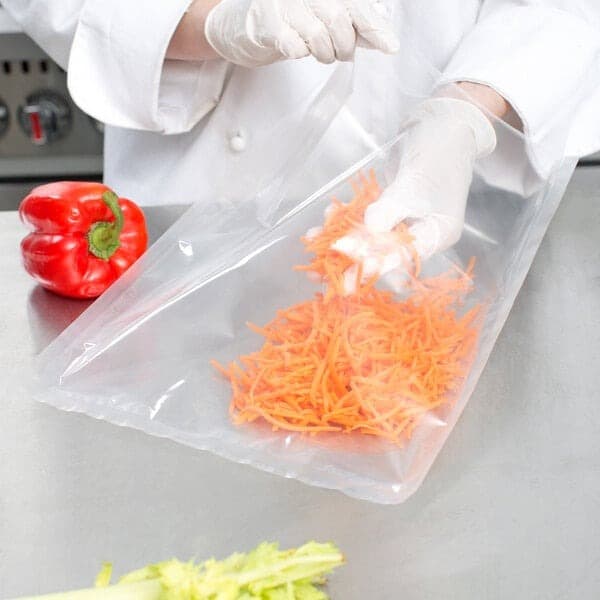
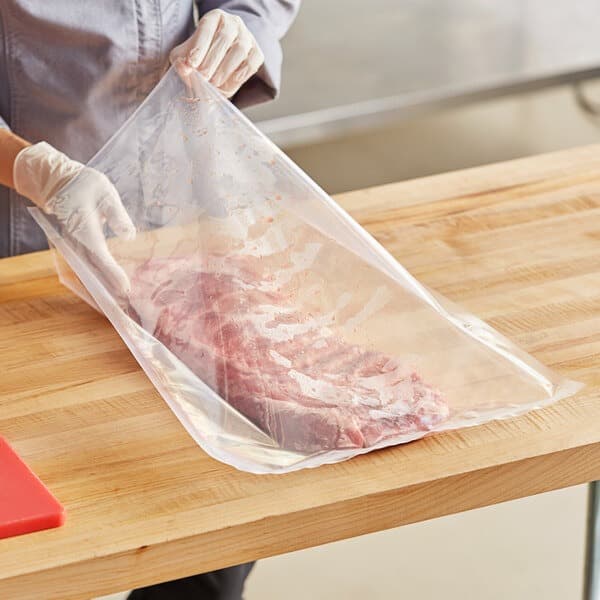
The bags you use matter as much as the machine itself. Chamber vacuum sealers require smooth-sided, multi-layer co-extruded pouches — typically 3 mil thickness — engineered to withstand vacuuming pressure, freezing, and in many cases sous vide water bath temperatures. External sealers require the textured corrugated bags mentioned above; the two pouch types are not interchangeable.
Pouches must be rated for the intended application. If you’re using the sealed bags for sous vide cooking, confirm the bags are rated for boiling or extended low-temperature water bath use. Look for food-safe, BPA-free options — especially if your operation has sustainability commitments. Stock multiple sizes to match your portioning needs: common commercial sizes run from 8″ x 10″ up to 14″ x 24″ for large proteins and full roasts. Browse the full range of food storage bags to match pouch size to your seal bar length.
Key Uses in a Commercial Kitchen
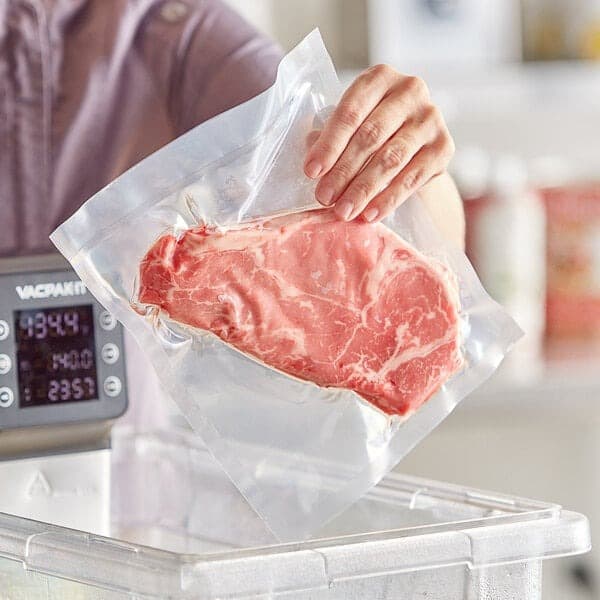
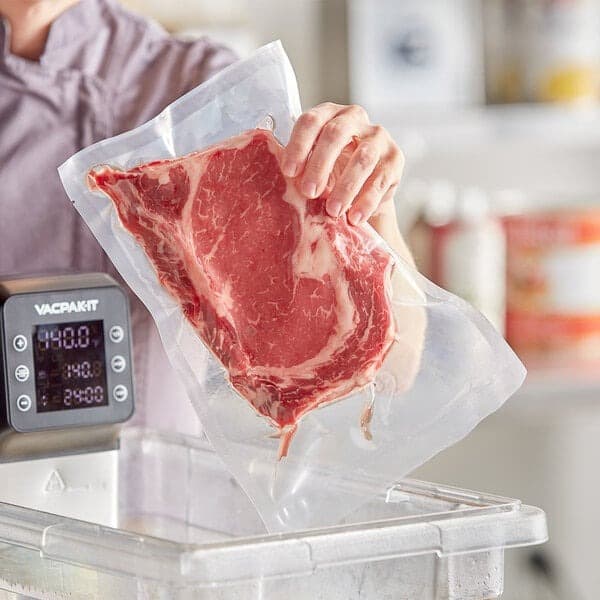
- Sous vide prep: Vacuum sealing is a prerequisite for sous vide; food must be in an airtight bag before going into a sous vide water bath for even heat transfer and moisture retention.
- Batch cooking and portioning: Seal large quantities of proteins, sauces, or components in advance for efficient prep-ahead workflows.
- Rapid marination and infusion: Vacuum pressure accelerates brine and marinade penetration into proteins significantly faster than conventional methods.
- Compression and rapid pickling: Chamber sealers enable modernist techniques like compressing fruit in syrups or flash-pickling vegetables under vacuum pressure.
- Curing and confit: Vacuum sealing accelerates and evens cure distribution; confits can be sealed and stored for extended periods.
- Extended cold and frozen storage: Sealed items integrate directly into organized walk-in cooler and freezer storage, reducing freezer burn and crowding.
Food Safety: What Vacuum Sealing Does Not Do
Vacuum sealing removes oxygen but does not eliminate all microbial risks. Anaerobic pathogens — most critically Clostridium botulinum — can proliferate in improperly stored vacuum-sealed foods. All vacuum-sealed TCS (Temperature Control for Safety) foods must be kept at 41°F or below in cold holding, well outside the temperature danger zone of 41°F–135°F.
HACCP compliance is non-negotiable when vacuum sealing is part of your production workflow. Vacuum sealing represents a critical control point in many food safety plans, and your food safety plan should document sealing protocols, storage temperatures, and labeling requirements. Use a probe thermometer to verify temperatures, maintain a cooling log for hot-packed items, and ensure all sealed items are clearly date-labeled for proper FIFO rotation.
What to Look for When Buying
For most commercial kitchens, a chamber vacuum sealer with an oil pump is the right investment. Look for NSF/ANSI certification, which confirms the machine meets foodservice sanitation standards. UL or ETL safety listings are standard for electrical components. Evaluate seal bar length against the pouch sizes you’ll use most, and confirm the chamber is deep enough to accommodate your largest portions. Well-regarded commercial brands include VacMaster (ARY Inc.), Waring Commercial, Hamilton Beach Commercial (PrimaVac line), Vollrath, Henkelman, and Promarks.
Operational and Cost Benefits
Vacuum sealers directly reduce food cost by cutting spoilage — fewer entries in your waste log means more revenue from ingredients already purchased. Pre-portioned, vacuum-sealed components shorten ticket times and support consistent plating. For prep cooks, sealing is a core part of daily mise en place that keeps the walk-in organized and the line ready. Pair sealed storage with a blast chiller to rapidly cool hot-packed foods before refrigeration — a best practice for both food safety and quality.
Common Uses
Vacuum sealers are used daily by prep cooks and line cooks in commercial kitchens to portion proteins, seal batch-cooked components, prep sous vide bags, and extend the cold and frozen storage life of perishable ingredients. Prep cooks typically operate the machine as part of morning mise en place, sealing portioned cuts, marinating proteins under vacuum pressure, and labeling sealed bags for FIFO rotation in the walk-in. Chefs at higher-end operations also use chamber vacuum sealers for modernist techniques — compressing fruit, rapid pickling vegetables, and infusing aromatics into proteins before service.
Related Products