Crescent Rounds
Crescent rounds refer to a banquet seating configuration where chairs are placed along two-thirds to three-quarters of a round table's circumference, leaving the side facing the stage or presenter open so no guest is seated with their back to the speaker.
Crescent rounds are a banquet seating arrangement where chairs are placed along only two-thirds to three-quarters of a round table’s circumference, leaving the side facing the stage or presenter completely open. The Events Industry Council (EIC) formally defines this configuration in its APEX industry glossary, making it a recognized standard across hotels, convention centers, and event venues. The setup is also widely referred to as Cabaret Setup or Half Moon Setup — all three terms are used interchangeably in hotel banquet operations.
Table Sizes and Seating Capacity
The most common tables used for crescent rounds are 60-inch (5′) and 72-inch (6′) diameter rounds. A 60-inch round seats approximately 6 guests in crescent configuration; a 72-inch round seats approximately 8. Both figures are lower than full banquet round capacity, which allows 8–10 guests per table when chairs surround the entire circumference.
Because chairs occupy only one side of each table, crescent rounds require roughly twice as many tables to seat the same number of guests as a full banquet round setup. Event managers must account for this when evaluating room capacity and building floor plans.
Spacing and ADA Requirements
A minimum of 5 feet (60 inches) of clearance between tables is the industry standard for crescent round layouts. This accommodates comfortable guest movement and service aisles throughout the event space. Under the Americans with Disabilities Act (ADA), banquet floor plans must maintain at least 36 inches of clear aisle space for wheelchair and mobility device access — a requirement that can further reduce total table count in tighter ballrooms.
Why Hotels Use Crescent Rounds
Crescent rounds are the go-to setup when an event combines meal service with a stage presentation, keynote address, award ceremony, or live entertainment. Every guest at the table faces the same focal point, so no one is seated with their back to the presenter — the defining advantage over full banquet rounds. The open table side also gives servers unobstructed access for plated course delivery, clearing, and replenishment.
The configuration works especially well for hybrid events that need to convert quickly between dining and general session formats. Corporate conferences, fundraising galas, award dinners, and wedding receptions with a stage or dance floor focal point are the most common use cases. Stage risers and AV screens should be positioned to maintain clear sightlines from every crescent position in the room.
Pros and Cons for Event Planning
- Pros: All guests face the presenter; ample table workspace; strong small-group interaction within each table; excellent food and beverage service access from the open side; compatible with both plated and action station service formats.
- Cons: Lower room capacity than full banquet rounds; requires more tables for the same guest count; potential sound bleed between adjacent tables; limited cross-room interaction between tables.
Setup Details and Operational Considerations
Crescent round setups are managed by the Banquet and Catering department and documented in the Banquet Event Order (BEO). The banquet captain or event services manager oversees execution on the day of the event. Each table requires a full round linen regardless of how many guests are seated, which affects linen par calculations — a detail purchasing managers should factor into event inventory planning.
Table skirting is commonly applied to crescent round tables in formal event settings to conceal table legs and elevate presentation. For gala and wedding layouts, crescent rounds are often arranged around a central dance floor, with highboy cocktail tables placed at room perimeters during the reception phase.
Serviceware for Crescent Round Events
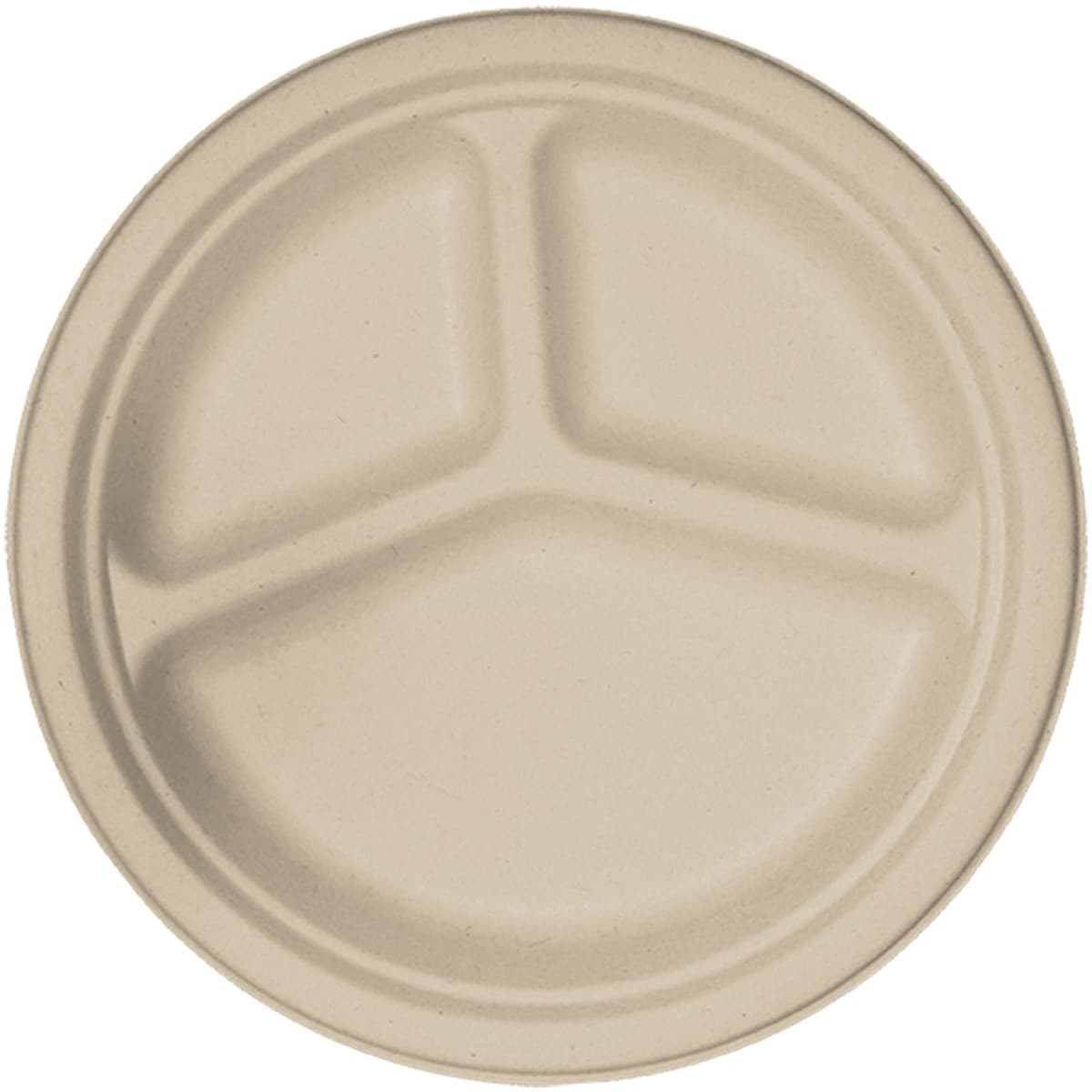
Each guest position at a crescent round table typically receives an individually plated course, making appropriately sized fiber plates an essential supply item. The open side of the table supports efficient passed or plattered appetizer service, shared vessels for family-style courses, or satellite setups for action stations — all of which reduce the total number of individual place settings needed compared to full banquet rounds.
Key Properties
Common Uses
Department & Usage: The Banquet and Catering department uses crescent rounds for events that combine dining with a stage presentation, keynote, award ceremony, or entertainment. Setup requirements are specified in the Banquet Event Order (BEO) by the catering sales or event services manager, and executed by the banquet captain. The configuration is most common at corporate conferences, fundraising galas, award dinners, and wedding receptions with a defined focal point such as a stage or dance floor. Event planners specify crescent rounds when sightlines to a presenter are a priority and meal service must run concurrently with the program.
Sustainability
Crescent rounds reduce the number of place settings per table compared to full banquet rounds, which can lower per-event consumption of disposable serviceware and single-use napkins. The open presenter-facing side of the table improves server access for more efficient course timing, clearing, and replenishment — reducing the likelihood of food waste from slow or missed service. For eco-conscious events, the open table space can also accommodate shared, family-style serving vessels or action station satellite setups, further reducing the need for individually plated disposable serviceware per guest.