Boxed Lunch
A boxed lunch is an individually portioned, self-contained meal pre-packaged in a single box or container — typically including a main item, sides, snack, condiments, and utensils — served as a catering format at hotel meetings, conferences, and events.
A boxed lunch is an individually portioned, self-contained meal pre-packaged in a single box or container and served as a catering format at hotel meetings, conferences, training sessions, and corporate events. Each box functions as a complete, sealed portion — eliminating shared serving stations and the infrastructure demands of buffet or plated service.
How Boxed Lunch Service Works in Hotel Catering
Boxed lunches fall under the Banquet & Catering division of the Food & Beverage department. Catering sales coordinators take the order and issue a Banquet Event Order (BEO) specifying quantities, menu selections, delivery times, and dietary accommodations. Banquet kitchen staff assemble the meals; banquet service staff distribute them at the event.
This format sits at the simplified end of the hotel catering service spectrum. Unlike buffets — which require action stations, chafers, and shared utensils — boxed lunches are dropped off and distributed with minimal setup. That makes them the go-to format for time-sensitive schedules where attendees need to eat quickly and return to sessions.
Standard Box Contents
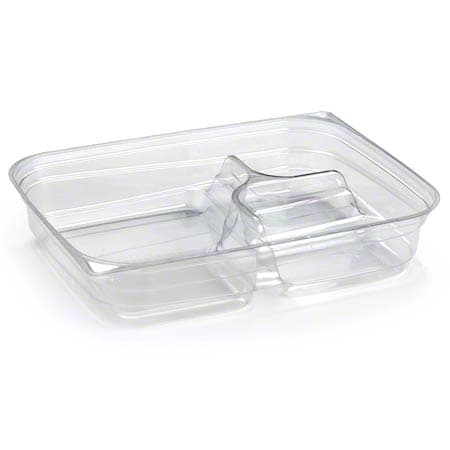
A complete hotel boxed lunch typically includes a main item (sandwich, wrap, or salad), one or two sides, a snack or dessert, a beverage or beverage coupon, and condiments with disposable utensils and a napkin — all sealed in a single container. Multi-compartment boxes keep components separated during transport and distribution.
Hotels commonly offer multiple menu options per event so attendees can pre-select based on dietary preference. Each box should be clearly labeled with its contents, menu designation (e.g., V, GF), and relevant allergen information to support allergen awareness compliance.
Packaging Options for Hotel Boxed Lunches
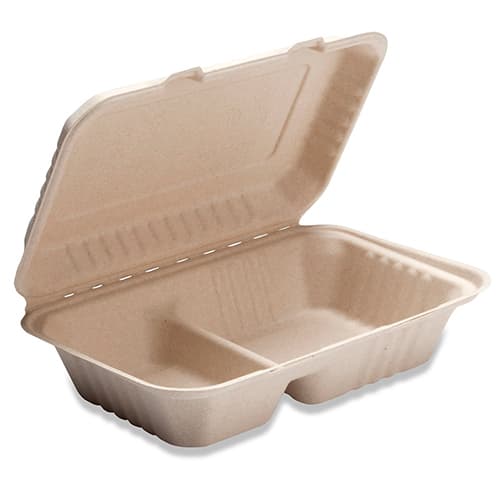
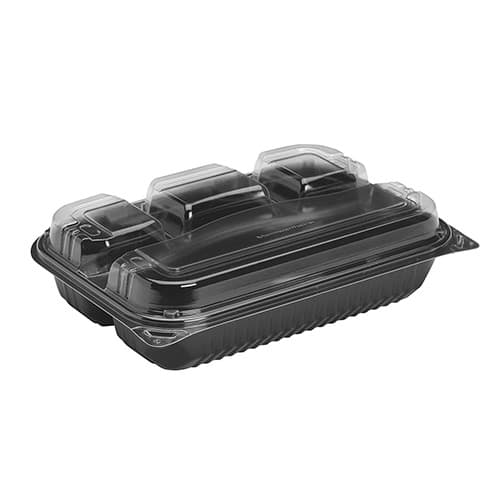
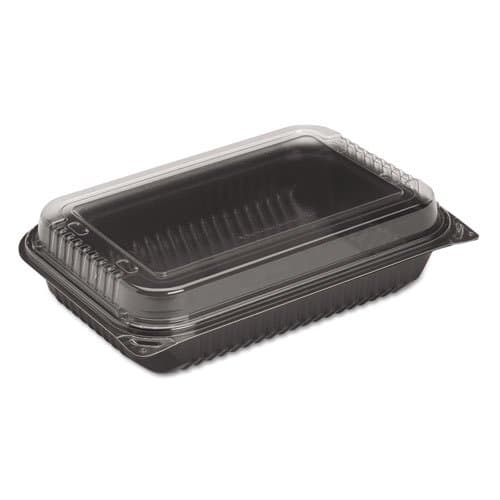
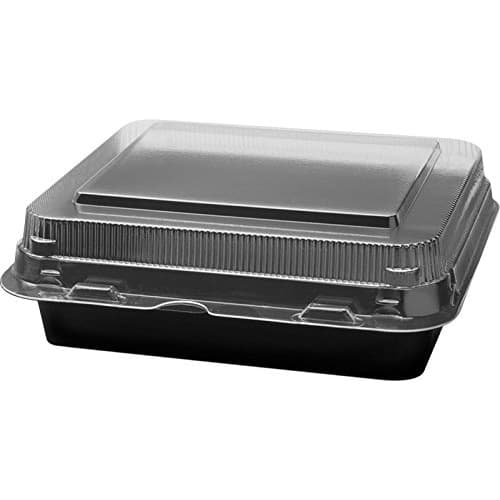
The right container depends on menu complexity and sustainability goals. Multi-compartment hinged boxes work well for full-meal presentations with a main, sides, and dessert. Single-compartment clamshells handle wraps, salads, or pasta dishes. For eco-conscious catering programs, kraft corrugated clamshells and bagasse fiber containers replace polystyrene and align with hotel green initiatives.
Common packaging formats available through SupplyClub include:
- 9″ x 6″ x 3″ Hoagie Box, 2-Compartment — ideal for sandwich-based menus with a separated side
- Solo Creative Carryouts 3-Compartment Dinner Box — upscale presentation for main, side, and salad or dessert
- Solo Creative Carryouts 4-Compartment Dinner Box — premium conference programs with full meal portioning
- Sabert 6″ x 6″ Corrugated Kraft Clamshell — eco-friendly option for sustainability-focused properties
- Bagcraft Eco-Flute Corrugated Clamshell — insulated corrugated construction for snack or dessert components
Sandwiches and wraps placed inside the box should be individually wrapped using waxed paper to maintain moisture and food quality during transport. Browse the full range of clamshell containers and takeout containers for hotel catering applications.
Food Safety Requirements
Cold boxed lunch items must be held at or below 41°F; hot items must be held at or above 135°F per FDA Food Code time-temperature control requirements. Foods that linger in the danger zone (41°F–135°F) present a foodborne illness risk and must be timed carefully from kitchen to distribution.
Hotels use insulated carriers or Cambro transport equipment to move bulk quantities of pre-assembled boxes from the banquet kitchen to meeting rooms while maintaining safe temperatures. Temperature logs and maximum hold times are standard operating requirements. HACCP protocols identify portioning, sealing, transport, and holding as critical control points in boxed lunch production.
Banquet kitchen staff and catering coordinators are typically required to hold ServSafe or equivalent food handler certifications covering these procedures.
Portion Control and Food Cost
Each sealed box represents one standardized portion, which simplifies food cost tracking. Because boxed lunches are priced per person and produced only for confirmed attendees, over-ordering is minimal compared to buffet formats. Accurate portioning during assembly ensures each box meets recipe spec and keeps per-unit costs consistent.
The per-person yield formula is straightforward: Total Boxed Lunch Revenue ÷ Number of Covers = Per-Person Yield. For example, a 200-person conference generating $4,000 in boxed lunch revenue yields $20 per cover — making margin analysis easy for catering managers. Recipe costing each menu option establishes the per-box food cost baseline that informs pricing.
Sustainability Considerations
BPI-certified compostable and molded fiber containers are the industry-preferred sustainable alternatives to polystyrene for hotel boxed lunch packaging. Hotels pursuing LEED or Green Key certifications can incorporate these formats into F&B sustainability reporting. The boxed lunch format also inherently reduces food waste — meals are only produced for confirmed attendee counts, eliminating the over-production common to display-style buffets.
Common Uses
Department & Usage: Boxed lunches are managed by the Banquet & Catering division within Food & Beverage. Catering sales coordinators book the order and generate a BEO specifying quantities, menu choices, dietary accommodations, and delivery times. Banquet kitchen staff assemble the meals in bulk; banquet service staff distribute them at the function. This format is most commonly used at corporate conferences, training sessions, lunch-and-learn meetings, convention break sessions, and working lunches where time is limited and buffet setup is impractical. Because each box is individually sealed and portioned, the format requires minimal on-site setup infrastructure and supports precise per-person cost accounting.
Sustainability
Boxed lunch programs offer meaningful sustainability advantages for hotel catering operations. Because meals are produced only for confirmed attendee counts, the format inherently reduces food waste compared to buffet service — there is no over-production for display. Hotels pursuing green certifications such as LEED or Green Key can strengthen their F&B sustainability reporting by specifying BPI-certified compostable or bagasse fiber containers in place of polystyrene. Molded fiber clamshells and corrugated kraft paper boxes are widely available sustainable alternatives that eliminate single-use plastic from the catering program. Locally sourced proteins, produce, and bread for boxed lunch menus further reduce the carbon footprint of hotel catering operations.
Related Products