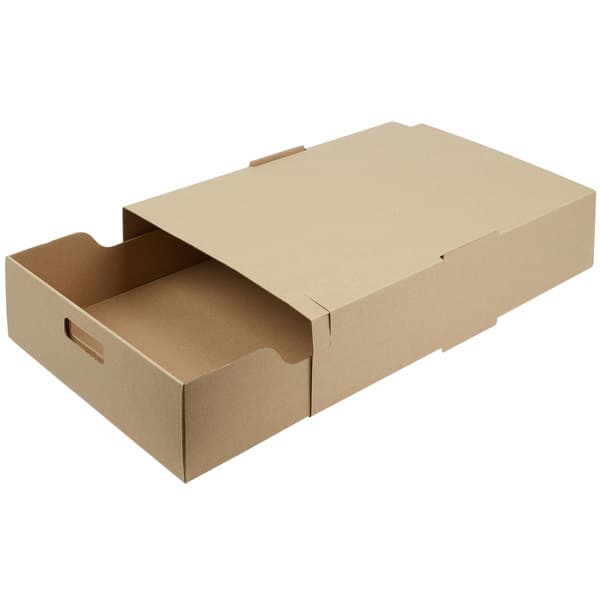
Banquet Buffet Riser
A banquet buffet riser is a platform, stand, or elevated surface placed on a banquet buffet table to add height variation and visual structure to food displays at catered events.
A banquet buffet riser is an elevated platform or stand placed on a buffet table to add height variation, visual structure, and dimension to food displays at catered events. Risers are a standard piece of banquet equipment used by hotel F&B departments to create multi-level presentations that improve guest visibility, maximize table space, and guide traffic flow through the buffet line.
What Banquet Buffet Risers Do
Risers solve a fundamental problem with flat buffet tables: everything sits at the same level, making it hard for guests to see what’s available and creating crowding at the front of the line. By staging dishes at multiple heights, banquet teams draw the eye across the entire spread and encourage guests to move along the table rather than cluster at one spot.
Risers also let the kitchen display more dishes in the same footprint. A single 8-foot banquet table can accommodate significantly more platters, chafing dishes, and bowls when the setup uses three or four tiers instead of a single flat surface. This is especially valuable at large corporate luncheons, wedding receptions, and breakfast buffets where menu variety is a selling point.
Materials and Event Matching
Banquet buffet risers are made from stainless steel, bamboo, acrylic, wood, porcelain, and HDPE plastic. Material selection should match event formality: polished stainless steel or clear acrylic suits formal corporate banquets and weddings, while natural wood or bamboo works well for casual receptions, farm-to-table menus, and outdoor events.
All riser surfaces used in NSF-regulated foodservice environments should be made from food-safe, non-porous, cleanable materials per NSF/ANSI Standard 2. Risers that come into proximity with food should be sanitized between events as part of HACCP-compliant banquet operations.
Arrangement and Setup Best Practices
Standard practice places the tallest risers at the center of the buffet table and steps down to shorter risers toward the edges. This pyramidal arrangement draws visual attention to centerpiece or feature dishes — a whole roasted protein at a carving station, an elaborate dessert display, or a signature appetizer — while keeping self-service practical at the table’s perimeter.
Adequate spacing between risers is critical. Guests need room to reach platters and serve themselves without knocking into adjacent dishes. Modular and nesting riser systems — sometimes called tiered or Skycap-style systems — allow the banquet team to reconfigure layouts between events to match different room setups and guest counts.
Lower-profile risers along the front edge of a table are also useful for displaying menu cards, signage, or ornamental pieces alongside the food, contributing to the overall food station aesthetic without consuming serving space.
Load Capacity and Structural Requirements
Commercial-grade banquet risers must support full hotel pans, ceramic platters, and chafers loaded with hot food. Load capacity per riser tier is a key spec to verify before purchasing — undersized or poorly constructed risers can fail under the weight of a full steam pan. When risers are supporting hot-holding equipment fueled by Sterno, the riser material must also be heat-tolerant and non-flammable.
Where Banquet Buffet Risers Are Used
Risers appear across nearly every buffet format in hotel F&B: breakfast buffets, corporate luncheons, cocktail receptions, wedding buffets, action stations, carving stations, dessert displays, and break service setups. They’re also common at serpentine buffet configurations, where varied heights compensate for the curved table layout and help guests navigate the line.
Sneeze guards are frequently paired with risers at self-service stations to protect elevated food displays from contamination. Linen draping or table skirting conceals the table base and any hidden riser supports, completing the polished banquet presentation.
Department Ownership
The Banquet or Catering department sets up, breaks down, cleans, and stores buffet risers. The Banquet Manager or F&B Director specifies riser placement as part of the overall function setup outlined in the Function Order. Risers are inventoried as front-of-house buffet equipment and treated as reusable assets that represent the property between events.
Serving Ware That Works With Risers
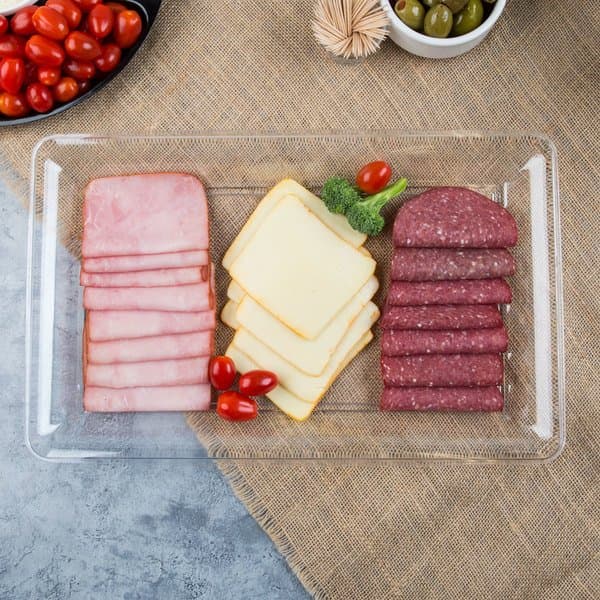
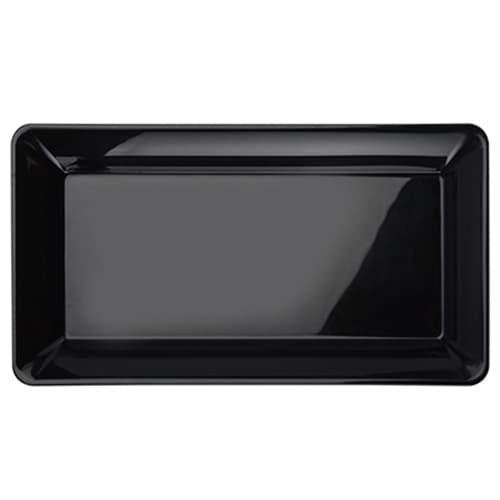
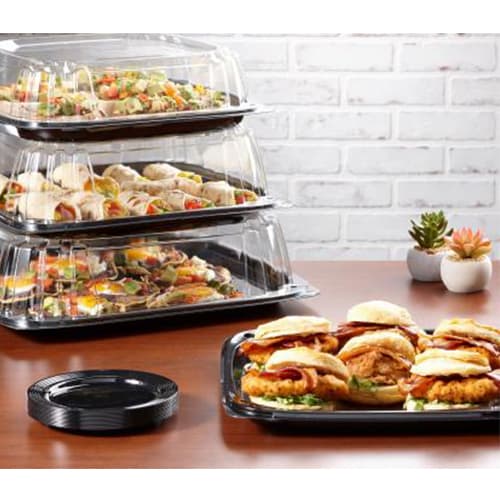
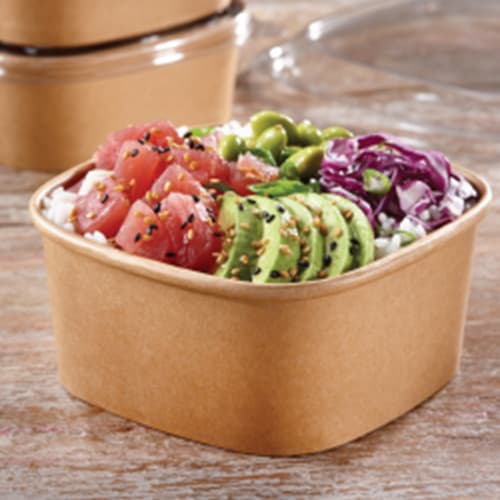
Risers support a range of serving vessels depending on the menu. Clear or black rectangular trays — such as the Fineline 18″ x 12″ Clear Cater Tray or the Fineline 12″ x 18″ Black Polypropylene Tray — sit cleanly on riser surfaces and create strong visual contrast for appetizers and cold foods. Large covered platters like the Sabert UltraStack 18″ Square Platter with Dome Lid protect elevated displays of charcuterie or deli spreads. Individual Sabert Kraft 16 oz. Paper Square Bowls work well on lower-tier risers for soups, salads, and sides. Full-size steam table pans set in chafers can be elevated on heavier-duty risers for hot-food displays.
A Hoffmaster 54″ x 54″ White Cellutex Table Cover laid beneath the riser setup conceals support hardware and creates a clean base for the full presentation. Browse the complete range of catering supplies and tabletop and guest presentation products to outfit your next buffet setup.
Key Properties
Common Uses
Department & Usage: Banquet buffet risers are owned and operated by the hotel's Banquet or Catering department. The Banquet Manager or F&B Director specifies riser placement as part of the Function Order for each event. Setup and breakdown is handled by the banquet setup team, who also clean, inventory, and store risers between uses.
Risers are used at virtually every buffet format in hotel F&B: breakfast buffets, corporate luncheons, wedding receptions, cocktail receptions, action stations, carving stations, dessert displays, and break service setups. They're also a standard component of serpentine buffet configurations and branded food station designs.
Sustainability
Bamboo buffet risers are a widely used sustainable alternative — bamboo is a rapidly renewable resource and a practical replacement for metal or single-use display materials. HDPE (High-Density Polyethylene) risers offer durability for both indoor and outdoor events with a lower environmental footprint than disposable décor alternatives.
Reusable commercial risers directly reduce reliance on single-use display materials, supporting a property's broader waste-reduction and sustainability initiatives. When pairing risers with disposable serving ware, selecting PFAS-free, compostable, or recyclable serving vessels — such as the Sabert Kraft PFAS-Free Paper Square Bowl — extends sustainable practices across the full buffet setup.
Related Products