Reception Table
A reception table is a food and beverage display or serving table configured for cocktail receptions and pre-dinner social hours, where guests stand and graze on hors d'oeuvres and finger foods rather than sit for a formal meal.
A reception table is a food and beverage display or serving table set up for a cocktail reception or pre-dinner social hour, where guests stand, mingle, and help themselves to hors d’oeuvres, finger foods, and light refreshments. Unlike plated or buffet formats, reception-style service emphasizes movement and social interaction over formal seated dining.
Reception Table vs. Other Banquet Formats
Reception tables differ from buffet service in one key way: guests graze freely rather than moving through a service line with full plates. Portions are smaller, seating is optional or minimal, and the event flow is driven by mingling rather than a structured meal progression.
Servers commonly circulate through the room using a server tray to pass bite-sized items — a format known as butlered service. Reception tables handle stationary food displays while butler-style passing fills the gaps between stations.
Typical Setup and Equipment
Reception tables are dressed with table skirting or linen drapes to create a polished presentation and conceal supplies stored underneath. Buffet risers add height variation to the display, improving visual appeal and making items easier for guests to access.
Hot food items are held in chafing dishes fueled by Sterno, keeping food above the 135°F safe hot holding threshold for the duration of the event. Cold displays — raw seafood, chilled salads, and composed appetizers — require proper cold holding with ice beds or refrigerated inserts.
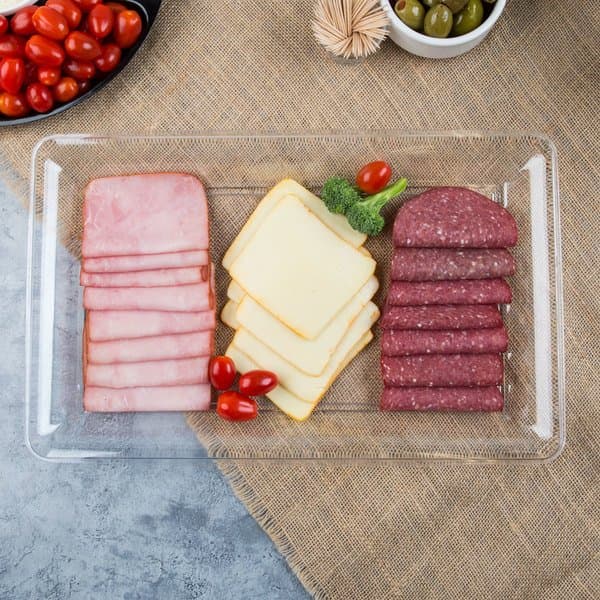
Standard equipment for a reception table setup includes catering platters, catering trays, catering pans, serving utensils, and cocktail napkins. Where local health codes require it, a sneeze guard must be placed over open food displays.
Table Types Used in Reception Setups
Cocktail rounds — also called highboys — are the most common table type at receptions. Their small diameter and standing height allow guests to rest plates and drinks while keeping the floor plan open for movement and conversation.
For larger display setups, serpentine tables create curved or winding configurations that guide guest flow around the food display. Banquet rounds may also be incorporated for seated cocktail seating at the perimeter of the event space.
Space Planning and Spacing Standards
The National Association of Catering and Events (NACE) recommends 10 to 12 square feet per person for round-table banquet seating with plated service. Reception-style standing setups typically support higher guest density, but traffic flow still requires careful planning.
Maintain a minimum of 54 inches between table edges for guest circulation and at least 60 inches on primary service aisles where catering staff will move. Always add 20–30% additional space beyond guest-area calculations to account for service zones and circulation paths.
Food stations and action stations are sometimes integrated into larger reception setups, each requiring their own dedicated service clearance. All layouts must comply with ADA requirements, maintaining accessible pathways throughout the event space.
Duration and Event Context
Industry guidance recommends a minimum of one hour for a cocktail reception before dinner. Standalone cocktail receptions typically run 1.5 to 2 hours. Reception tables appear at weddings, corporate events, galas, fundraisers, hotel pre-function social hours, and break service setups for multi-day conferences.
Operational Management
The hotel’s Banquet and Catering department is responsible for planning, setting up, and executing reception table service. The Catering or Banquet Manager oversees table layout, staffing, and food display quality. All setup specifications — table type, layout, guest count, staffing, and menu — are documented in the Banquet Event Order (BEO), which serves as the binding operational blueprint for every catered event.
Food safety compliance is non-negotiable. HACCP principles govern time-temperature control for all food on display, and ServSafe-certified staff should be assigned to monitor holding temperatures throughout the event. Local health department regulations may impose additional requirements around open-display food, sneeze guards, and holding equipment.
Sustainability Considerations
Reception tables can incorporate compostable or BPI-certified platters and bagasse-fiber serving ware to reduce single-use plastic waste. Reusable chafing dishes, platters, and serving utensils are preferred over disposables for upscale or sustainability-focused events.
Careful portion planning is essential in reception-style service. The grazing, self-service nature of reception tables makes over-ordering easy — accurate per-person quantity estimates reduce food waste significantly. Learn more about sustainable catering packaging in our blog post on how fiber bowls are revolutionizing takeout and catering packaging.
Common Uses
Department & Usage: The Banquet and Catering department sets up and manages reception tables for weddings, corporate events, galas, fundraisers, and hotel cocktail hours. The Catering or Banquet Manager documents all layout specifications — table type, guest count, staffing, and menu — in the Banquet Event Order (BEO). During the event, servers may circulate with trays of passed hors d'oeuvres while guests graze from stationary table displays. Reception tables also appear as break service setups for multi-day conferences and as pre-function social areas adjacent to ballroom events.
Sustainability
Reception table setups can incorporate BPI Certified Compostable platters, bagasse-fiber trays, or PLA-lined serving ware as alternatives to single-use plastic. For upscale or environmentally conscious hotel events, reusable chafing dishes, platters, and serving utensils are the preferred standard over disposable alternatives.
Portion planning is one of the most practical sustainability levers in reception catering. The self-service, grazing format makes over-ordering common — precise per-person quantity estimates directly reduce food waste. Seasonal and locally sourced menu items for reception displays further reduce the event's carbon footprint and align with sustainable hospitality sourcing practices.
Related Products