Skirted Buffet Table
A skirted buffet table is a food-service display table used in hotel banquet and catering operations where a decorative fabric or plastic skirt is attached to the table edges to conceal the legs and underside storage, creating a uniform, professional presentation for guests.
A skirted buffet table is a food-service display table fitted with a decorative fabric drape — the skirt — that conceals the table’s legs, frame, and underside storage while presenting a polished, uniform appearance to guests. It is a standard setup element in hotel banquet halls, catered events, and resort dining operations ranging from breakfast buffets to formal wedding receptions.
What Is Table Skirting?
Table skirting is the tailored drape attached to the edges of a banquet or buffet table, hanging from the tabletop to just above the floor. It serves a dual purpose: elevating visual presentation and hiding bins, cables, backup supplies, or staging materials stored beneath the table during service.
Standard Dimensions and Attachment
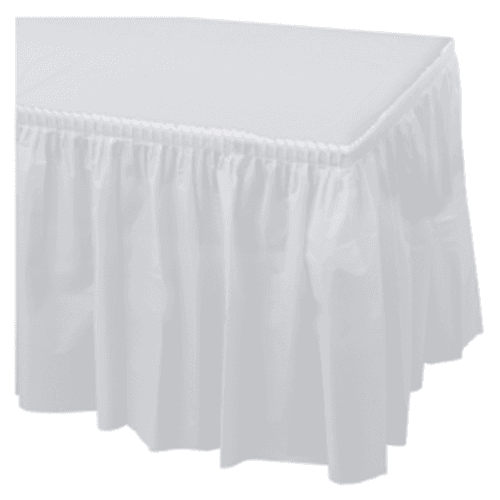
Standard table skirts for a 6-foot folding banquet table measure approximately 13–14 feet wide by 29 inches tall. They attach to the table edge using spring clips or hook-and-loop (Velcro) fasteners, which allow quick setup and removal during event turnover. The Hoffmaster 110010 White Plastic Table Skirt is a widely used disposable option at these dimensions, designed for single-use catering setups where laundry logistics are impractical.
Pleat Styles
Box pleats produce a crisp, structured fold preferred for formal banquets and corporate events. Shirred or gathered pleats create a soft, flowing drape suited to relaxed social occasions. Flat panel designs offer a sleek, contemporary look increasingly common in modern hotel event spaces. Pleat style selection is typically guided by event formality and the property’s brand standards.
Materials
Polyester is the most common material in commercial hospitality — durable, wrinkle-resistant, and easy to launder and reuse across multiple events. Satin skirts appear in luxury and formal wedding setups. Spandex fitted skirts deliver a modern tailored look for upscale conferences. Disposable plastic skirts are a low-cost, no-laundry option for high-volume or outdoor catering events where reusable fabric isn’t practical.
Buffet Table Configuration and Guest Flow
Skirted buffet tables are configured to direct logical guest movement: plates at the start of the line, followed by cold items, then hot dishes, with desserts and napkins/cutlery at the end. For events of 100 or more guests, industry best practice calls for duplicate or double-sided buffet lines — or a serpentine buffet layout — to prevent bottlenecks and maintain service pace.
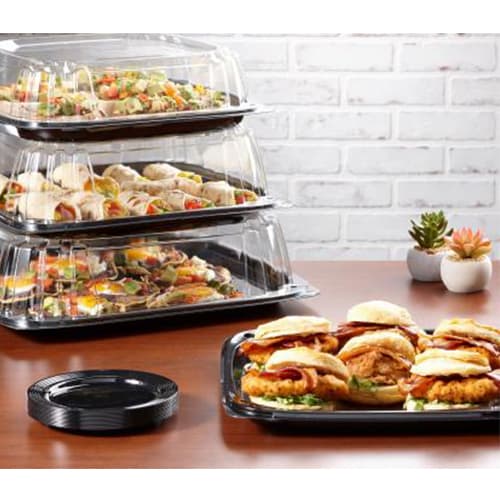
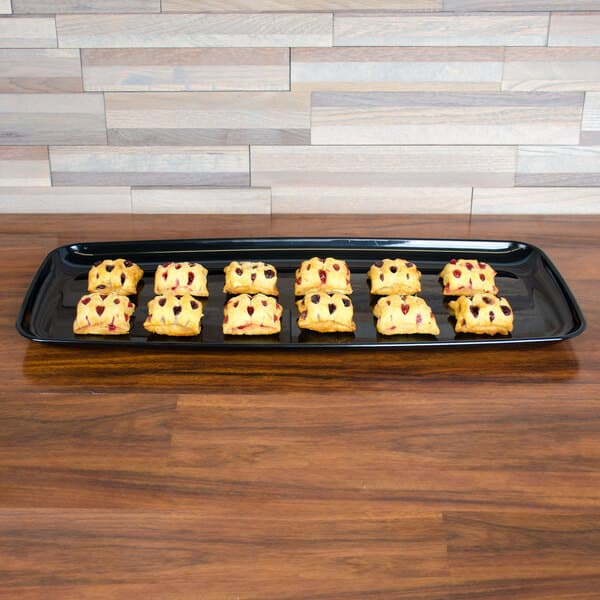
Common setups built on skirted buffet tables include chafing dishes for hot food holding, buffet risers for tiered height variation, sneeze guards for food safety compliance, and catering platters for cold food display. Specialized configurations — carving stations, action stations, and coffee stations — all use the skirted buffet table as their base setup.
Food Safety Requirements
Food displayed on skirted buffet tables must comply with HACCP and ServSafe standards regardless of decorative presentation. Hot food must be held above 135°F (57°C); cold food must be held at or below 41°F (5°C). Local health department regulations also govern sneeze guard requirements for self-service lines. The skirt itself has no food safety function but must not obstruct access to temperature-control equipment such as chafers or ice pans.
BEO Documentation
Every skirted buffet table setup in a hotel is specified in the Banquet Event Order (BEO), which documents skirt color, table configuration, placement, and service style. Banquet setup staff execute the layout from the BEO, ensuring consistency with the client’s event vision and the property’s service standards.
Key Properties
Common Uses
Department & Usage: The Banquet/Catering department owns skirted buffet table setup, executed by banquet setup staff under the direction of the Banquet Manager or F&B Manager. Setup details — including skirt color, table count, and configuration — are documented in the Banquet Event Order (BEO) and deployed for breakfast buffets, wedding receptions, corporate conferences, holiday events, and break service for meetings. Skirted tables serve as the base for chafing dishes, buffet risers, catering platters, and sneeze guards across all buffet service formats. The same skirting technique is applied to reception tables, highboy tables, and serpentine tables throughout event spaces.
Sustainability
Reusable polyester or linen fabric skirts are the preferred sustainable choice in hotel banquet operations — laundered and cycled across multiple events, reducing single-use waste. Hotels with sustainability commitments (LEED, Green Key, AHLA sustainability guidelines) are encouraged to track table skirt reuse rates as part of broader linen par and linen-reduction programs.
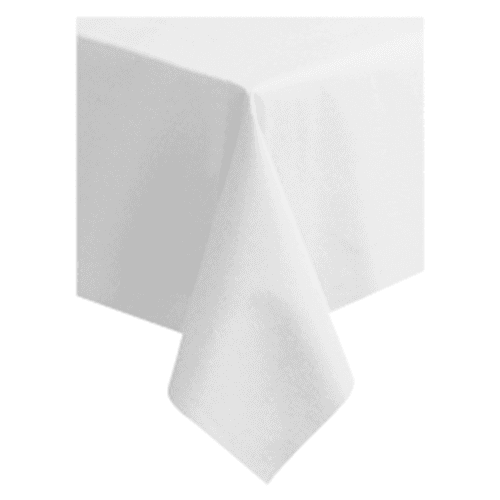
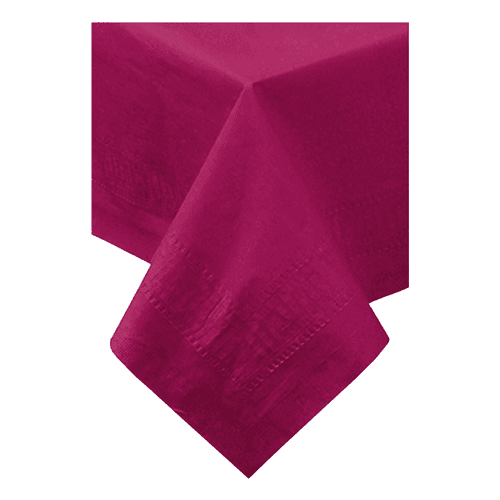
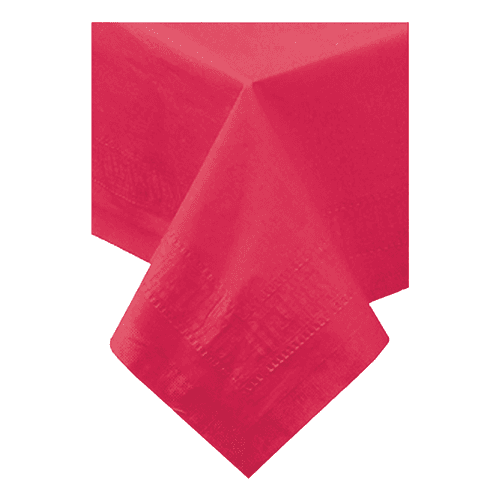
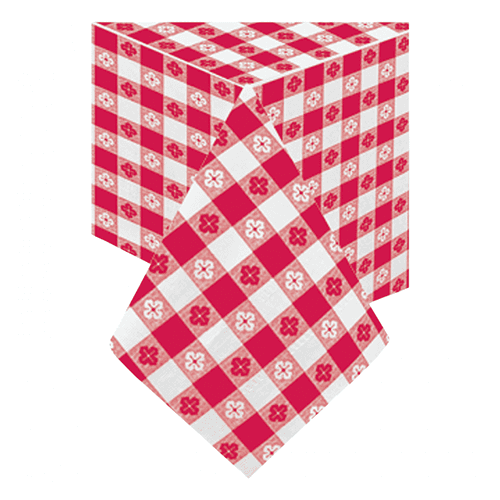
Disposable plastic table skirts — such as the Hoffmaster 110010 White Plastic Table Skirt — offer a lower-cost, no-laundry alternative suited to outdoor catering, high-turnover events, or venues without on-site laundry facilities, though they contribute to single-use plastic waste. Tissue/poly table covers represent a middle-ground option with a lighter waste profile and cleaner appearance than standard paper covers.
Related Products